
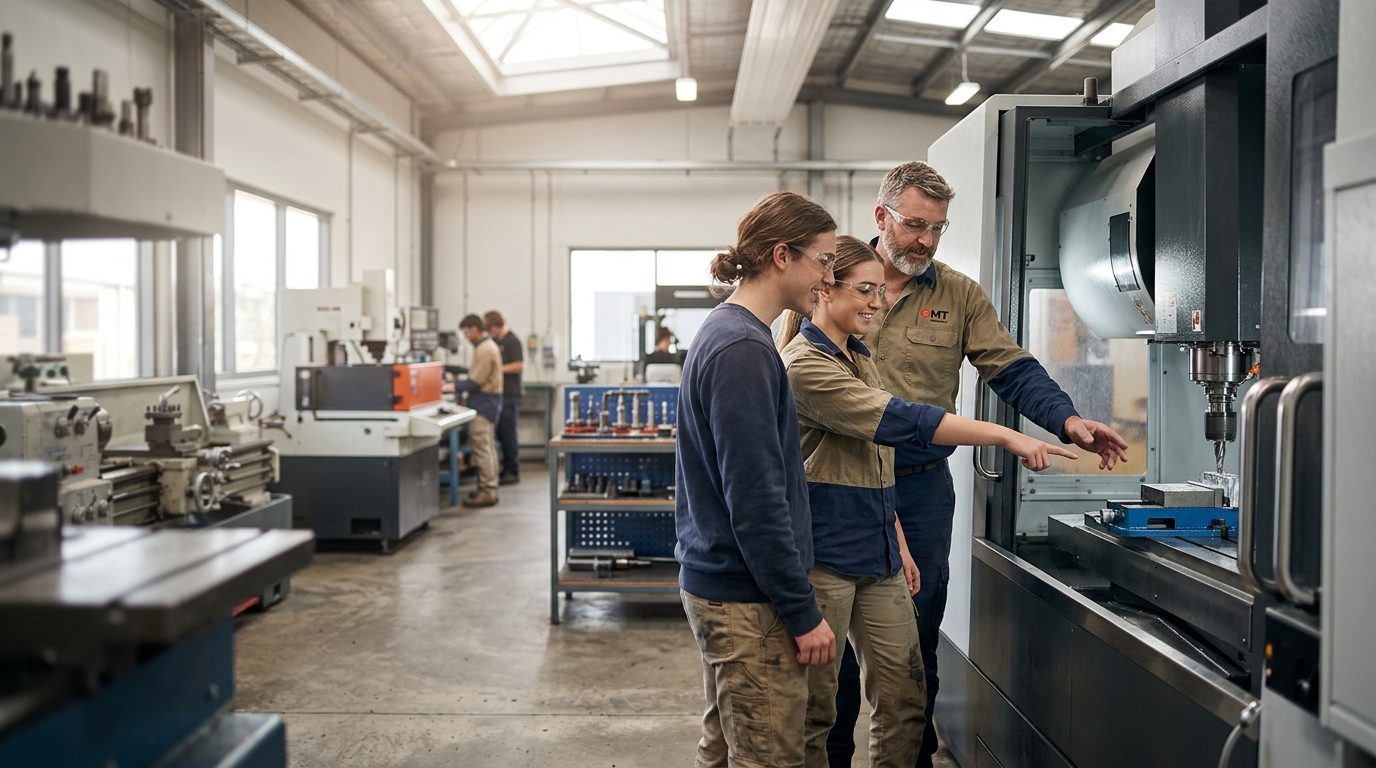
Education institutions across Australia are undergoing a significant transformation in their manufacturing and engineering workshops. According to recent industry analysis, the demand for skilled tradespeople in the Australian manufacturing sector has grown by over 15% in the last five years, driven by a national push for advanced manufacturing capabilities. This surge in demand means that TAFEs and universities can no longer rely on outdated equipment. They must equip their students with the same technology used in modern industry. This guide explores the specific machine tools, brands, and strategic partnerships that define the current landscape of Australian technical education. (Why QMT About us)
Industry-Standard Brands Used in Education
When selecting machinery for educational purposes, the primary criterion is industry relevance. Students must learn on machines that mirror the ones they will encounter in their future workplaces. Australian TAFEs and universities predominantly partner with global manufacturers that have established a strong local presence. This ensures that the training provided is directly transferable to the workforce.
One of the most trusted names in the Australian workshop landscape is King Rich. Known for their durability and precision, King Rich machines are a staple in general engineering workshops across the country. Their manual lathes and milling machines are frequently found in TAFE campuses because they offer a robust platform for students to master fundamental machining techniques. The brand’s reputation for reliability ensures that educational institutions can maintain consistent teaching schedules without frequent mechanical interruptions.
Another significant player in the educational sector is Vision Wide. This brand is often associated with high-precision CNC turning centres and machining centres. Universities focusing on advanced manufacturing and aerospace engineering often integrate Vision Wide equipment into their curricula. The brand’s commitment to manufacturing excellence aligns with the rigorous standards required for higher education in engineering disciplines. By using these brands, institutions ensure that their graduates are proficient in operating machinery that meets stringent industry qualification processes.
The choice of brand is not arbitrary. It is a strategic decision to bridge the gap between theoretical knowledge and practical application. When a student graduates from a TAFE program, they should be able to step into a commercial workshop and operate the equipment with confidence. This is why institutions prioritize brands that offer a combination of global innovation and local support. The availability of spare parts and technical expertise in Australia is just as important as the machine’s technical specifications.
Core Equipment Categories for Workshops
A well-equipped engineering workshop requires a diverse range of machine tools. Each category serves a specific purpose in the manufacturing process, and students must gain proficiency in all of them. The following sections outline the core equipment categories that are essential for any Australian technical education facility.
Manual Milling and Turning Machines
Manual milling machines and lathes remain the foundation of machining education. They allow students to understand the fundamental principles of metal removal, tool geometry, and cutting speeds. Without a solid grasp of manual machining, students will struggle to appreciate the complexities of CNC automation. QMT Machinery offers a range of manual milling machines and lathes that are designed for heavy-duty educational use. These machines are built to withstand the rigors of daily student operation while maintaining the precision required for accurate machining.
The manual lathe, in particular, is a critical tool for teaching turning operations. Students learn how to face, turn, bore, and thread workpieces by hand. This hands-on experience is invaluable for developing the tactile skills that are often lost in automated environments. The manual milling machine complements this by teaching students how to create complex geometries using end mills and face cutters. These machines are often the first point of contact for students entering the field of mechanical engineering.
CNC Machining Centres
As the industry moves towards automation, CNC machining centres have become indispensable in educational workshops. These machines allow students to program and operate complex parts using G-code and CAM software. The transition from manual to CNC machining is a crucial step in a student’s development. It requires a deep understanding of tool paths, feed rates, and material properties.
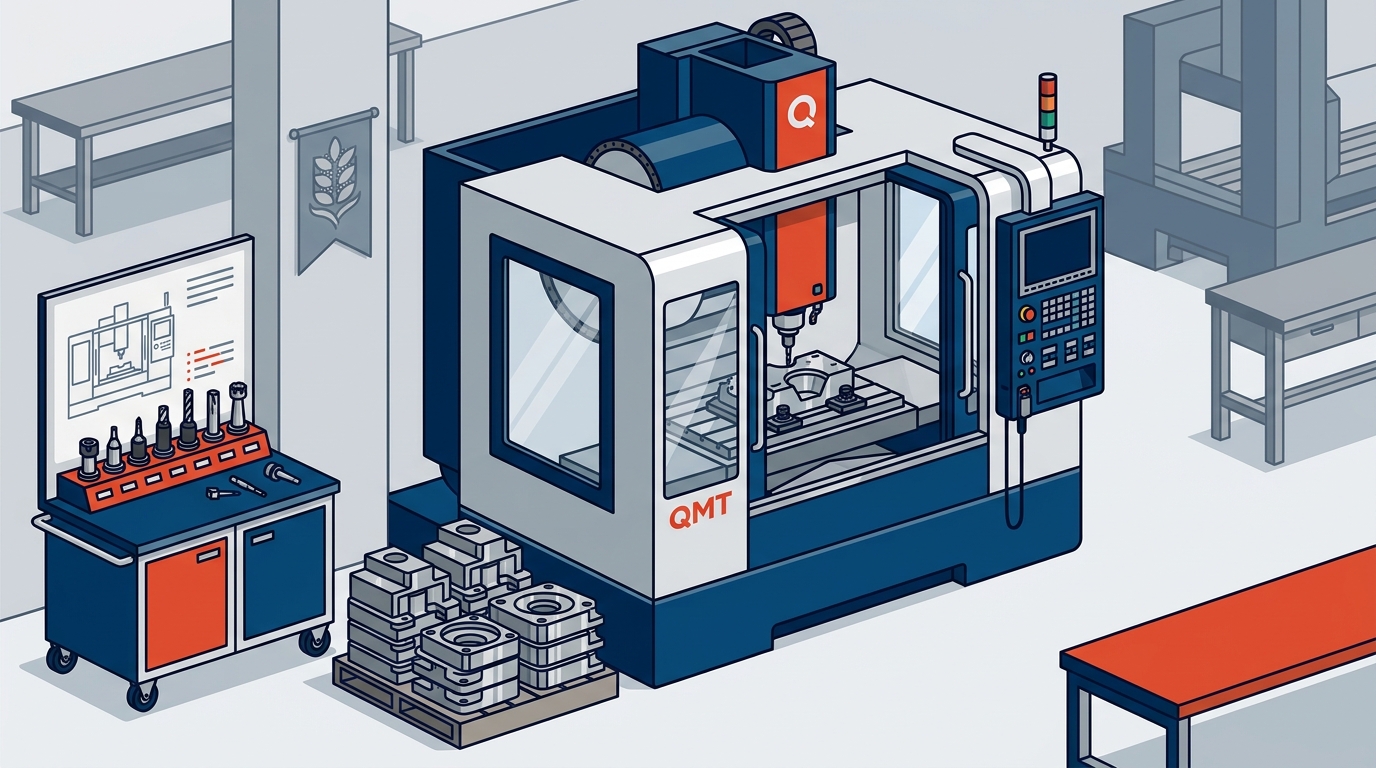
QMT Machinery provides a comprehensive range of CNC machining centres, including vertical and horizontal configurations. These machines are equipped with advanced control systems that mimic those found in top-tier manufacturing facilities. By training on these systems, students gain the skills necessary to work in modern industrial environments. The integration of CNC technology in the classroom also allows for more complex projects, such as the production of aerospace components or automotive parts.
Grinding Machines
Grinding is a finishing process that achieves high precision and smooth surface finishes. Surface grinders and cylindrical grinders are essential for teaching students about tolerances and surface integrity. These machines are often used in the later stages of the manufacturing process, where minute adjustments can make the difference between a合格 and a rejected part.
Understanding grinding mechanics is critical for engineers who work with hardened steels and other difficult-to-machine materials. The precision offered by grinding machines allows students to explore the limits of material removal and surface quality. This knowledge is particularly valuable in industries such as medical device manufacturing and aerospace, where component reliability is paramount.
CNC and Automation in the Classroom
The integration of CNC and automation technologies in educational workshops is not just about keeping up with industry trends. It is about preparing students for the future of manufacturing. Automation includes not only CNC machines but also robotic arms, automated material handling systems, and remote diagnostics.
Remote diagnostics is a growing trend in the machine tool industry. It allows service technicians to monitor machine performance and diagnose issues in real-time. This technology is increasingly being adopted by educational institutions to minimize downtime and ensure that learning is not disrupted by mechanical failures. QMT Machinery offers internet-based machine tool service, which provides unprecedented efficiency and real-time insights into machine health.
By incorporating remote diagnostics into their maintenance strategies, TAFEs and universities can ensure that their equipment is always operational. This reliability is crucial for maintaining the integrity of the educational program. Students need consistent access to machinery to complete their practical assessments and projects. Any downtime can have a significant impact on their learning outcomes and graduation timelines.
Furthermore, the use of automation in the classroom helps students understand the broader context of modern manufacturing. They learn how machines communicate with each other, how data is collected and analyzed, and how automation can improve productivity and quality. These skills are highly sought after by employers who are looking for graduates who can thrive in Industry 4.0 environments.
EDM and Precision Metrology
Electrical Discharge Machining (EDM) is a specialized process used for machining hard metals and complex geometries. There are two main types of EDM machines: Wire Cut EDMs and Die-Sinking EDMs. Wire Cut EDMs use a thin, electrically charged wire to cut through conductive materials. They are ideal for creating precise dies, punches, and intricate shapes. Die-Sinking EDMs use a shaped electrode to erode material, allowing for the creation of complex cavities and molds.
Australian TAFEs and universities often include EDM in their advanced manufacturing courses. This is particularly relevant for students pursuing careers in tool and die making, mold making, and aerospace engineering. The ability to work with EDM machines is a specialized skill that commands a premium in the job market.
Precision metrology is another critical component of engineering education. Metrology equipment, such as coordinate measuring machines (CMMs) and micrometers, is used to verify the dimensions and tolerances of machined parts. Students must learn how to use these tools to ensure that their work meets the required specifications. The accuracy of metrology equipment is directly linked to the quality of the final product. Therefore, institutions must invest in high-quality metrology tools to provide students with accurate and reliable measurement capabilities.
The Critical Role of After-Sales Support
For educational institutions, the purchase of machinery is just the beginning. The long-term success of their engineering programs depends on the quality of after-sales support they receive. Machines are complex pieces of equipment that require regular maintenance, calibration, and occasional repairs. Without reliable support, even the best machines can become obsolete or unusable.
QMT Machinery has built its reputation on market-leading service and outstanding brand partnerships. Since 1967, the company has stood behind every machine with relentless support, expert technicians, and a commitment to long-term performance. This commitment is particularly important for educational institutions, which rely on their equipment to deliver consistent and high-quality training.
The support provided by QMT includes not only technical assistance but also training and education. They help institutions integrate new technologies into their curricula and ensure that their staff are proficient in operating and maintaining the equipment. This holistic approach to service ensures that educational institutions can maximize the value of their investment and provide their students with the best possible learning experience.
Furthermore, QMT’s commitment to quality without compromise means that they only partner with brands that meet stringent performance and reliability criteria. This ensures that the machines provided to educational institutions are of the highest quality and are built to last. The longevity of these machines is a testament to the integrity and trust placed in QMT by thousands of operators, workshops, and manufacturers across the country.
Key Takeaways
- Industry Alignment: Australian TAFEs and universities prioritize brands like King Rich and Vision Wide to ensure students learn on industry-standard equipment.
- Core Machinery: Manual lathes, milling machines, and CNC machining centres form the backbone of engineering workshops.
- Specialized Processes: EDM and precision metrology are essential for advanced manufacturing and tool and die making courses.
- Service Importance: Reliable after-sales support is critical for minimizing downtime and ensuring consistent educational delivery.
- Historical Trust: QMT Machinery has served the Australian market since 1967, building a reputation for unmatched value and quality.
- Technology Integration: Remote diagnostics and automation are becoming standard in educational workshops to prepare students for Industry 4.0.
- Strategic Partnerships: Institutions partner with manufacturers who offer both global innovation and local technical expertise.
Frequently Asked Questions
Why do Australian TAFEs prefer specific machine tool brands?
They prefer brands that are widely used in the industry, such as King Rich and Vision Wide, to ensure that students gain transferable skills that are directly applicable to their future careers in manufacturing and engineering.
What is the role of manual lathes in modern engineering education?
Manual lathes teach the fundamental principles of metal removal and tool geometry. They provide students with the tactile skills and understanding necessary to appreciate the complexities of CNC automation.
How does remote diagnostics benefit educational institutions?
Remote diagnostics allows for real-time monitoring and diagnosis of machine health, minimizing downtime and ensuring that learning is not disrupted by mechanical failures.
What types of EDM machines are commonly used in universities?
Wire Cut EDMs and Die-Sinking EDMs are commonly used. Wire Cut EDMs are ideal for intricate shapes and dies, while Die-Sinking EDMs are used for creating complex cavities and molds.
Why is after-sales support critical for educational workshops?
Reliable after-sales support ensures that machines are maintained and repaired promptly, which is essential for maintaining consistent educational delivery and maximizing the value of the investment.
What is the significance of precision metrology in engineering courses?
Precision metrology teaches students how to verify the dimensions and tolerances of machined parts, ensuring that their work meets the required specifications and quality standards.
How long has QMT Machinery been serving the Australian market?
QMT Machinery has been serving the Australian market since 1967, establishing a long-standing reputation for reliability, quality, and exceptional service.
Partner with QMT Machinery
Equipping your engineering workshop with the right machine tools is a strategic decision that impacts the quality of your education and the success of your graduates. QMT Machinery offers a comprehensive range of milling, turning, grinding, and EDM machines, backed by decades of industry expertise and local support. Whether you are outfitting a new workshop or upgrading your existing equipment, QMT can help you find the perfect solution for your needs.
Visit our products page to explore our full range of machine tools. For more insights on selecting the right equipment, check out our blog. If you have specific questions about our brands or services, please contact us today. Let us help you build a future-ready engineering program.