
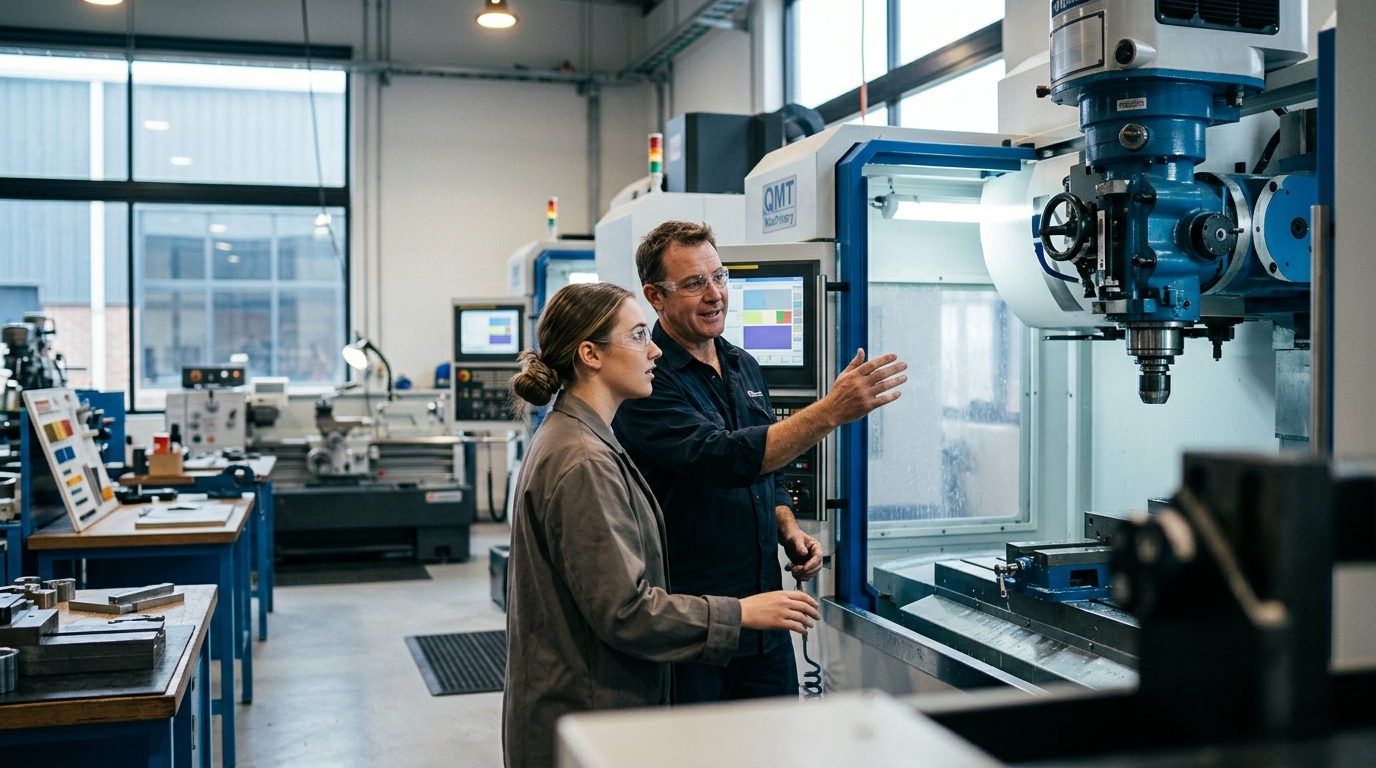
Education institutions across Australia are undergoing a significant shift in their manufacturing curriculum to align with Industry 4.0 standards. According to recent workforce development reports, the demand for skilled CNC operators and advanced machinists has grown by over 20% in the last five years. This surge requires educational facilities to invest in robust, industry-standard equipment that mirrors modern workshop environments. The gap between academic training and industrial reality is closing, driven by a need for precision, automation, and digital integration in metalworking education. (QMT Machinery Quality Machine)
Industry Partnerships and Brand Selection
Australian technical colleges and universities prioritize equipment that offers longevity, serviceability, and global brand recognition. The choice of machinery is not merely about initial cost but about the total cost of ownership and the quality of technical support available locally. Institutions often partner with established distributors who provide not just hardware, but comprehensive training and after-sales support.
QMT Machinery has been a cornerstone of the Australian manufacturing education sector since 1967. Founded in 1967, the company has built a reputation for bridging the gap between high-end European OEMs and the practical needs of Australian workshops and schools. By focusing on brands like King Rich and Vision Wide, QMT ensures that students learn on machines that are reliable, durable, and widely used in the industry.
The selection of machine tools in educational settings is heavily influenced by the need for safety and ease of use. Manual machines are often introduced first to teach fundamental principles, while CNC machines are integrated later to demonstrate automation and precision. This progression ensures that students develop a deep understanding of machining before moving to complex digital controls.
Core Equipment: Milling and Turning
The backbone of any mechanical engineering program is the milling and turning department. These machines form the foundation of metalworking skills, teaching students how to shape raw materials into precise components.
Manual Milling Machines
Manual milling machines remain essential for teaching the fundamentals of feed rates, spindle speeds, and tool paths. Manual Milling Machines are favored in TAFEs because they allow instructors to demonstrate techniques without the complexity of software interfaces. Students learn to read micrometers, set up workpieces, and understand the physical forces involved in cutting metal.
These machines are robust and require minimal maintenance, making them ideal for high-traffic educational environments. The tactile feedback provided by manual controls helps students develop an intuitive sense of machining that is often lost in fully automated systems.
CNC Machining Centres
As the industry moves toward automation, CNC machining centres have become a critical component of university curricula. Machining Centres offer multi-axis capabilities that allow for complex geometries and high-precision parts. These machines are used to teach G-code programming, tool path optimization, and automated tool changing.
The integration of CNC technology in education prepares students for the modern workforce, where digital literacy is as important as manual skill. Institutions often invest in both 3-axis and 5-axis machines to cover a wide range of applications, from simple prototyping to advanced aerospace component manufacturing.
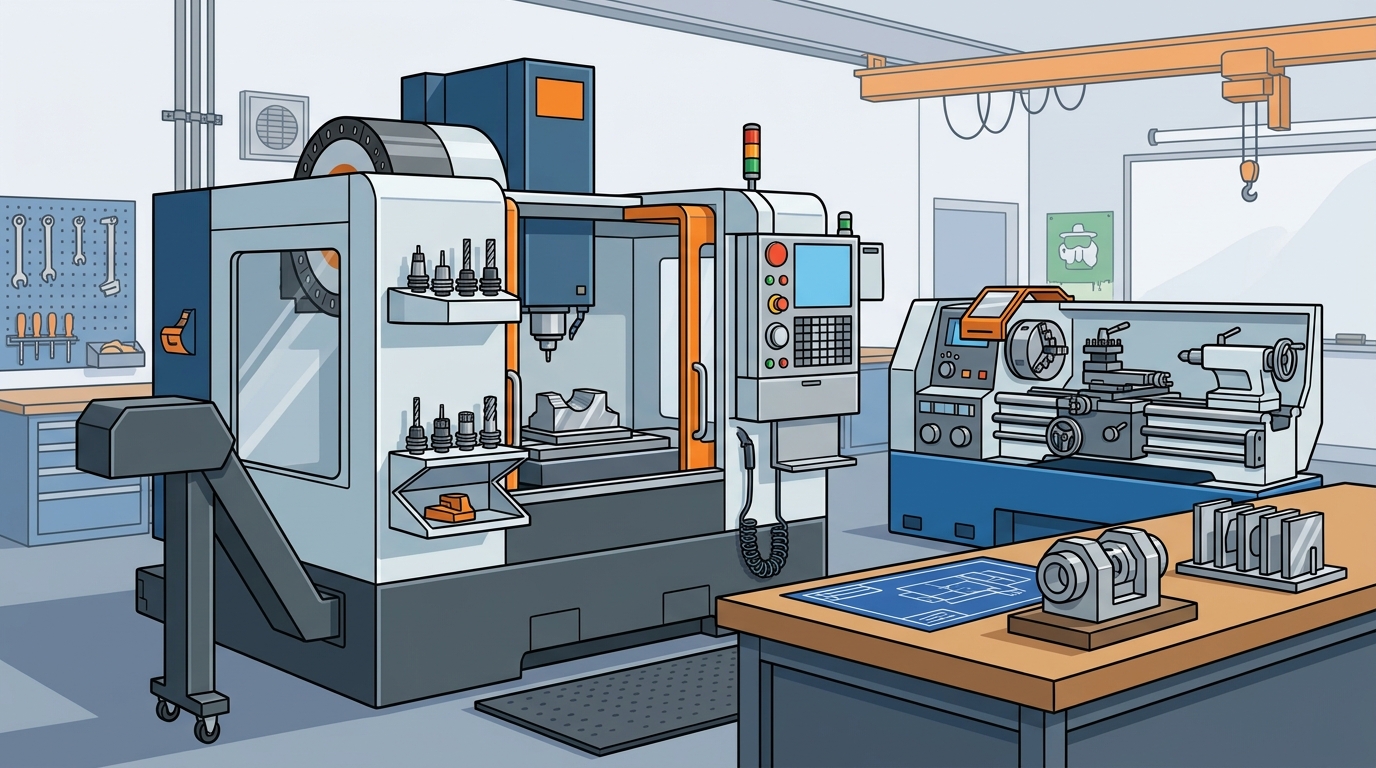
Turning Machines and Lathes
Turning operations are equally important, focusing on the creation of cylindrical parts. Manual Lathes are used to teach the basics of turning, facing, and threading. These machines are straightforward to operate and maintain, making them a staple in introductory courses.
For more advanced training, CNC Lathes and Turning Centres are employed. These machines combine turning with milling capabilities, allowing for complex parts to be produced in a single setup. This efficiency mirrors modern manufacturing practices, where reducing setup time is crucial for productivity.
Specialized Machining: EDM and Grinding
Beyond standard milling and turning, specialized processes like Electrical Discharge Machining (EDM) and grinding are taught in advanced engineering programs. These processes are essential for creating hard-to-machine materials and achieving ultra-fine surface finishes.
Wire Cut EDMs
Wire Cut EDMs are used for cutting complex shapes in conductive materials with high precision. Wire Cutters are particularly valuable in tool and die making, where intricate geometries are required. Students learn how to use electrical erosion to cut materials that are too hard for traditional cutting tools.
This technology is increasingly important in the automotive and aerospace industries, where lightweight, high-strength materials are common. Understanding EDM processes gives students a competitive edge in the job market.
Die-Sinking EDMs
Die-Sinking EDMs are used for creating molds and dies for injection molding and stamping. Die-Sinking & Drilling EDMs allow for the creation of complex cavities and textures that are difficult to achieve with other methods. These machines are essential for students interested in mold making and tool design.
Grinding Machines
Grinding is the final step in many machining processes, used to achieve precise dimensions and smooth surface finishes. Surface Grinders and Cylindrical Grinders are used to teach the principles of abrasive machining. These machines require careful setup and operation to ensure accuracy and safety.
The precision of grinding machines makes them indispensable in the production of high-quality components. Students learn how to select the right grinding wheels and coolant for different materials, ensuring optimal performance and tool life.
Metrology and Quality Control
Quality control is a critical aspect of manufacturing education. Metrology Equipment is used to measure and verify the dimensions of machined parts. This includes micrometers, calipers, height gauges, and coordinate measuring machines (CMMs).
Students learn how to use these tools to ensure that parts meet strict tolerances. This knowledge is essential for maintaining quality in any manufacturing environment. The integration of metrology into the curriculum ensures that students understand the importance of precision and accuracy in their work.
Equipment Comparison for Institutions
When selecting machine tools, educational institutions must consider factors such as cost, maintenance, training, and industry relevance. The table below compares the primary equipment categories used in Australian TAFEs and universities.
| Equipment Category | Primary Use in Education | Key Brands Supported | Industry Relevance |
|---|---|---|---|
| Manual Milling | Fundamental machining principles | King Rich, Vision Wide | High |
| CNC Machining Centres | Automation and complex geometries | King Rich, Vision Wide | Very High |
| CNC Lathes | Rotational parts and turning | King Rich, Vision Wide | Very High |
| Wire EDM | Precision cutting of hard materials | Specialized OEMs | Medium |
| Surface Grinders | Final surface finishing | Specialized OEMs | Medium |
Key Takeaways
- Historical Stability: QMT Machinery has served the Australian market since 1967, providing consistent support to educational institutions.
- Brand Focus: King Rich and Vision Wide are primary brands used in TAFEs due to their reliability and local support.
- Curriculum Progression: Education moves from manual machines to CNC and specialized processes like EDM and grinding.
- Industry Alignment: Equipment selection is driven by the need to prepare students for Industry 4.0 manufacturing environments.
- Service Importance: After-sales service and technical support are critical factors in machine tool selection for schools.
- Metrology Integration: Quality control tools are integrated into the curriculum to emphasize precision and accuracy.
- Regional Support: Local service teams in Melbourne and Kingston ensure minimal downtime for educational facilities.
Frequently Asked Questions
Why do Australian TAFEs prefer King Rich machines?
King Rich machines are preferred for their durability, ease of maintenance, and strong local support network. They offer a balance of performance and cost-effectiveness that suits educational budgets.
What is the role of EDM in university engineering programs?
EDM is taught to demonstrate precision cutting techniques for hard materials. It is essential for students interested in tool and die making, as well as aerospace manufacturing.
How does QMT Machinery support educational institutions?
QMT provides comprehensive support including training, spare parts, and technical assistance. Their long-standing presence in Australia ensures reliable service for schools and universities.
Are manual machines still relevant in modern engineering education?
Yes, manual machines are crucial for teaching fundamental machining principles. They provide students with a tactile understanding of metal cutting that is often lost in automated systems.
What types of grinding machines are used in TAFEs?
TAFEs typically use surface grinders and cylindrical grinders. These machines are used to teach precision finishing techniques and surface quality control.
How important is metrology equipment in machining courses?
Metrology equipment is vital for teaching quality control. Students learn to use measurement tools to ensure parts meet strict tolerances, a key skill in manufacturing.
Does QMT Machinery offer remote diagnostics for educational machines?
Yes, QMT offers remote diagnostics services to help educational institutions troubleshoot issues quickly and minimize downtime.
Partner with QMT Machinery
Equipping your institution with the right machine tools is a critical decision that impacts the quality of education and the readiness of your students for the workforce. QMT Machinery offers a comprehensive range of milling, turning, and specialized machining equipment tailored for educational needs.
Contact our team today to discuss your requirements and explore our product catalog. Visit our contact page to schedule a consultation or request a brochure. Let us help you build a future-ready manufacturing program.