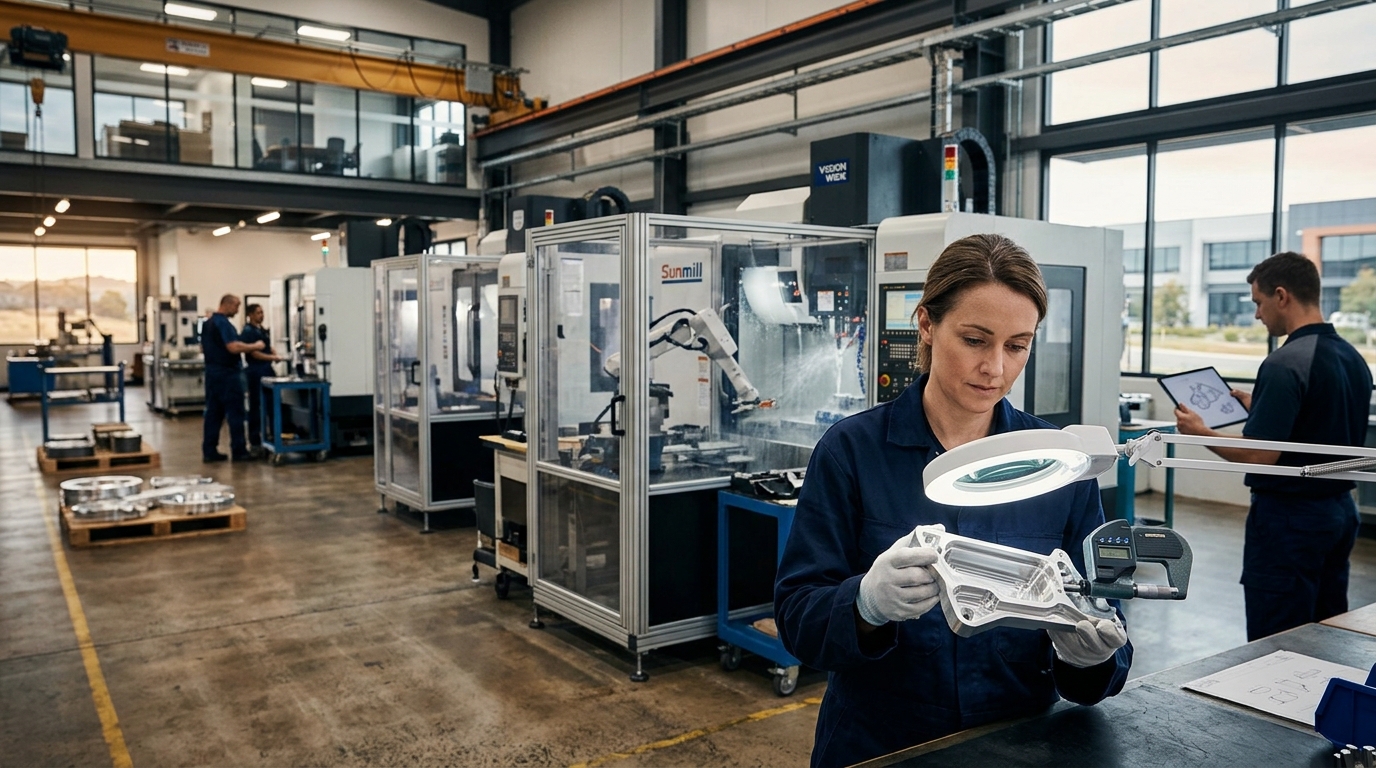
Outsourcing high-volume CNC production allows Australian manufacturers to scale output without the capital burden of expanding in-house facilities. By leveraging specialized contract manufacturing services, businesses can access advanced machinery, skilled labor, and rigorous quality control systems that meet strict industry standards. This approach ensures consistent part quality while optimizing production timelines and reducing operational overhead.
1. Specialized Contract Machining Facilities
Specialized contract machining facilities offer dedicated capacity for complex, high-tolerance components. These providers typically operate large fleets of CNC machining centres and turning centres designed for specific material types. They handle the entire production lifecycle, from CAD file preparation to final finishing and inspection. This option is ideal for companies that require strict adherence to aerospace or medical industry standards.
2. Multi-Service Job Shops
Multi-service job shops provide flexibility by combining turning, milling, and grinding under one roof. These facilities are well-suited for projects that require multiple machining processes on a single component. By consolidating operations, manufacturers can reduce handling time and minimize the risk of dimensional drift between processes. This integrated approach is particularly beneficial for prototype runs that transition into low-to-medium volume production.
3. Regional Manufacturing Hubs
Regional manufacturing hubs reduce logistics costs and lead times for local supply chains. Australia’s major industrial corridors in Melbourne, Sydney, and Perth host numerous high-capacity workshops. Proximity to these hubs allows for frequent quality checks and rapid iteration during the development phase. Local outsourcing also supports domestic supply chain resilience and ensures compliance with Australian manufacturing regulations.
4. Vertical Integration Partners
Vertical integration partners manage the entire value chain from raw material to finished goods. These providers source materials, perform all machining operations, and handle surface treatment and assembly. This level of control is critical for high-volume runs where material consistency and process stability are paramount. It eliminates the coordination challenges associated with managing multiple third-party vendors.
5. Technology-Forward Automation Providers
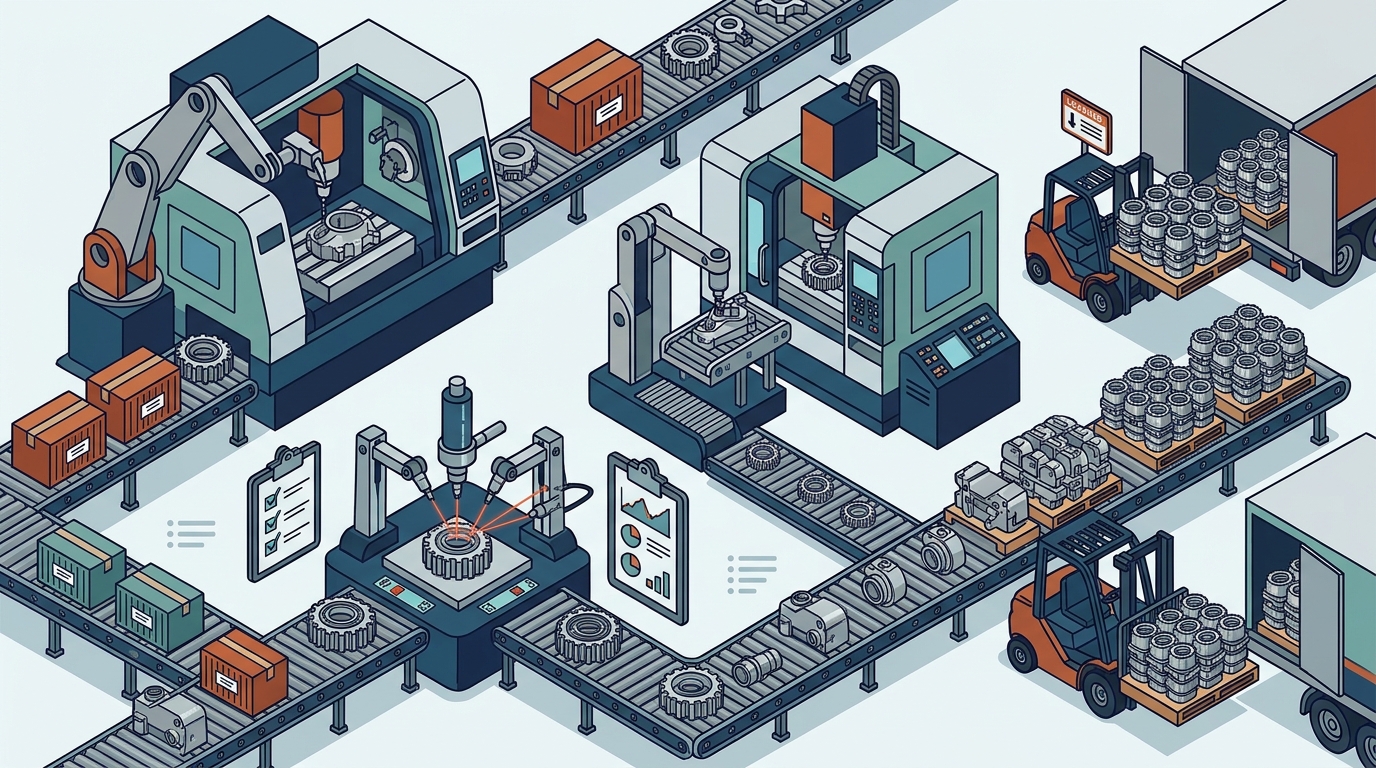
Technology-forward automation providers utilize advanced robotics and IoT for continuous production. These facilities employ automated loading systems and real-time monitoring to maximize machine uptime. They are capable of running 24/7 production cycles, which is essential for meeting tight delivery deadlines on large orders. This option is best for companies that prioritize throughput and data-driven process optimization.
6. Niche Industry Specialists
Niche industry specialists possess deep expertise in specific sectors like mining or defense. These providers understand the unique material properties and testing requirements of their target industries. They often hold specific certifications and accreditations that generalist shops may lack. Partnering with a specialist ensures that your components meet the rigorous demands of high-stakes applications.
7. Hybrid In-House and Outsourced Models
Hybrid models allow companies to retain core competencies while outsourcing peak demand. This strategy involves keeping critical or proprietary processes in-house while sending high-volume, less complex parts to external partners. It provides the flexibility to scale up or down based on market demand without the risk of underutilized assets. This approach balances cost efficiency with operational control.
Choosing the Right Partner
Selecting the right outsourcing partner requires a clear assessment of your production volume, tolerance requirements, and industry standards. Evaluate potential providers based on their machine capability, quality management systems, and financial stability. A strong partnership is built on transparent communication and a shared commitment to delivering high-quality components on time.
Frequently Asked Questions
What is the minimum order quantity for high volume CNC outsourcing?
Minimum order quantities vary by provider, but high-volume outsourcing typically begins at several hundred units. Some specialized facilities may require larger batches to justify setup costs, while others can accommodate smaller runs with premium pricing.
How do I ensure quality control when outsourcing CNC production?
Quality control is ensured through contractual agreements that specify inspection protocols and acceptance criteria. Reputable providers offer full traceability, including material certificates and dimensional reports for every batch. Regular audits and on-site visits can further verify compliance with your standards.
Can I outsource complex 5-axis machining in Australia?
Yes, many Australian contract manufacturers operate advanced 5-axis CNC machining centres. These facilities are capable of producing complex geometries in a single setup, which improves accuracy and reduces lead times. Look for providers with proven experience in your specific industry.
What are the benefits of outsourcing versus in-house production?
How long does it take to set up a new outsourcing relationship?
Setting up a new relationship typically takes four to eight weeks, depending on the complexity of the parts. This period includes supplier qualification, sample production, and process validation. Establishing a strong foundation early ensures smoother long-term collaboration.
Do Australian manufacturers offer competitive pricing for high volume runs?
Australian manufacturers offer competitive pricing for high-volume runs due to economies of scale and advanced automation. While labor costs may be higher than in some offshore locations, the benefits of quality, speed, and supply chain security often justify the investment.
Next Steps
QMT Machinery supports Australian manufacturers by providing the high-performance machine tools and technical expertise needed to build or expand production capabilities. Our team of application engineers can help you evaluate your current setup and identify the right equipment for your specific production goals. To discuss your requirements, .