
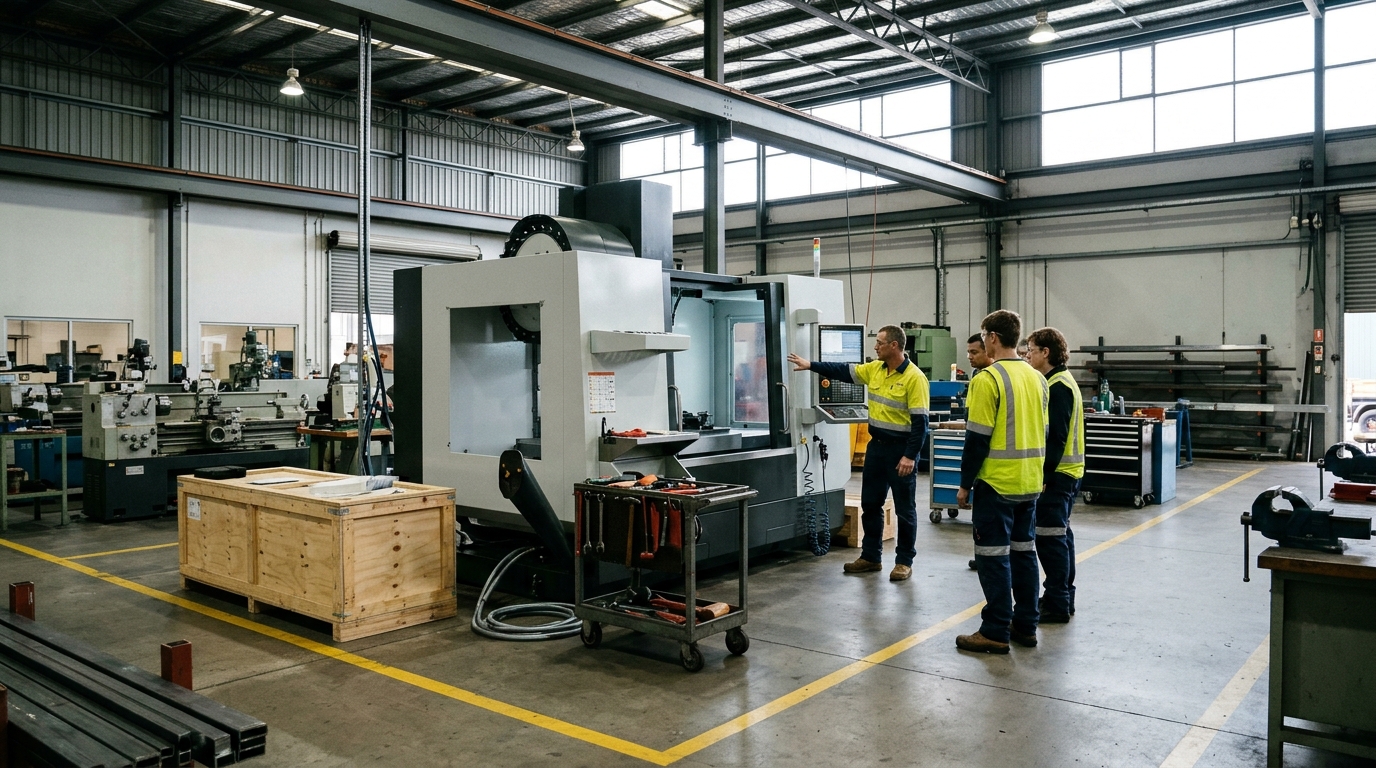
Setting up a CNC machining centre in a TAFE workshop typically takes 2 to 4 weeks, depending on site preparation and software licensing. This guide walks you through the physical installation, safety compliance, and initial programming required to get students cutting metal safely. QMT Machinery supports Australian educational institutions with equipment that balances industrial capability with training suitability.
Before You Start
Ensure your workshop meets the following prerequisites before the machine arrives. A CNC machining centre is a precision instrument that requires a stable environment. Verify that the floor can support the machine's weight, which often exceeds 2,000 kg for vertical machining centres. Confirm that your electrical supply matches the machine's voltage and phase requirements. You will also need a dedicated network connection for the control system and a clear path for the machine to be moved into the room.
Step 1: Site Preparation and Power
Action: Install the dedicated electrical circuit and prepare the floor. A dedicated circuit prevents voltage drops that can crash the control system during heavy cutting. The floor must be level and free of vibration from adjacent equipment. Result: A stable, level concrete pad with a correctly rated power supply ready for connection. The area should be clear of obstructions to allow for safe operator movement and tool changes.
Step 2: Physical Installation and Levelling
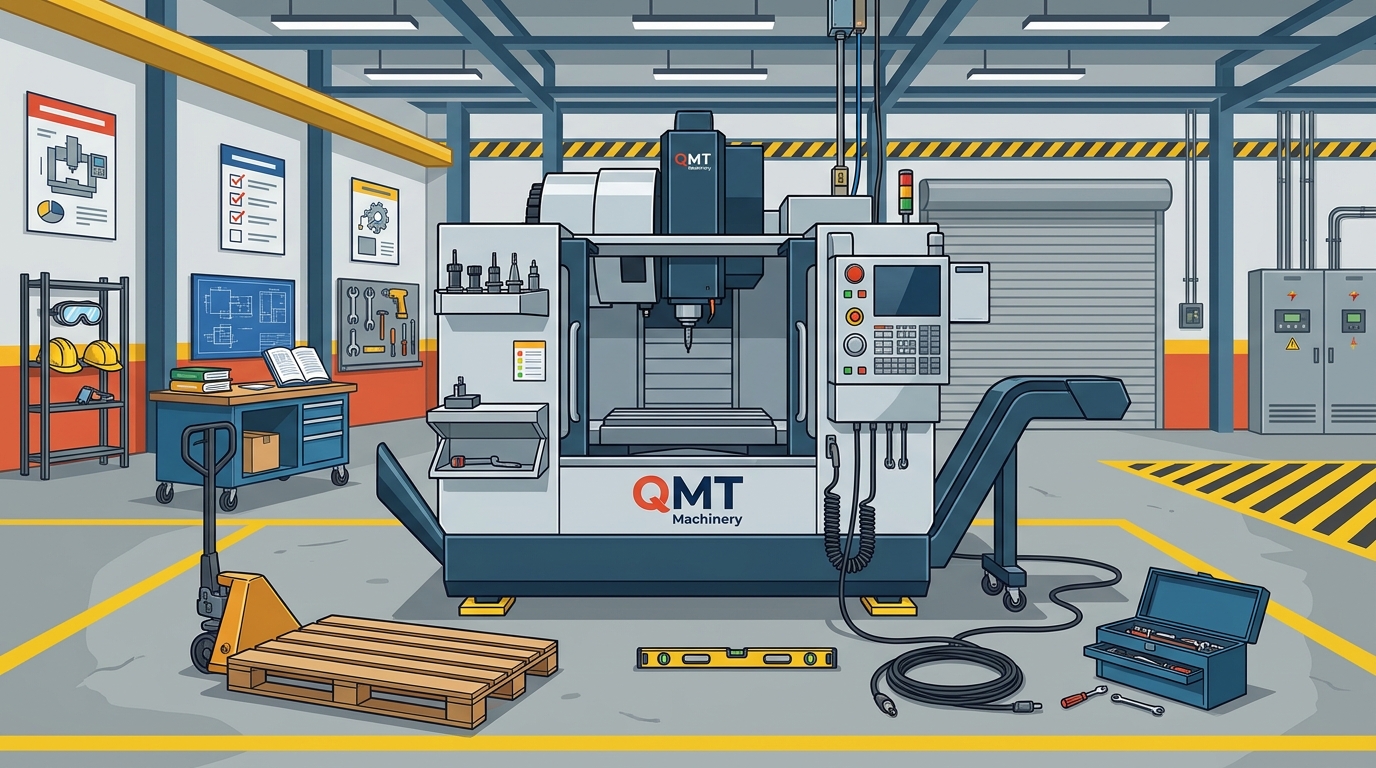
Action: Move the machine into position and level it using the built-in feet. Use a precision level to adjust the machine's base until it is perfectly horizontal. This step is critical because any tilt affects the machine's geometric accuracy. Result: The machine sits flush on the floor with all four feet firmly seated. The level indicates zero deviation across both the X and Y axes. Secure the machine to the floor if required by the manufacturer's manual to prevent shifting during operation.
Step 3: Safety and Compliance Checks
Action: Install safety guards, emergency stops, and interlocks. TAFE environments require strict adherence to Work Health and Safety (WH&S) regulations. Ensure that all moving parts are shielded and that emergency stop buttons are accessible from all operator positions. Result: The machine passes a safety audit. All guards are locked in place, and the emergency stop circuit is functional. Documentation of these safety features should be ready for your institution's compliance records.
Step 4: Software and Control Setup
Action: Configure the CNC control and install necessary software. Connect the control panel to the network and load the machine's specific post-processor for your CAD/CAM software. Set up user accounts for staff and students with appropriate permission levels. Result: The control system boots correctly and communicates with the CAD/CAM software. You can upload a simple G-code program and simulate it without errors. The interface is customized to match your teaching curriculum.
Step 5: Calibration and Test Runs
Action: Perform a full calibration and run a test part. Use a test bar or calibration tool to verify the machine's axis movements and spindle speed. Run a simple test part, such as a block with a pocket, to check for accuracy and surface finish. Result: The machine cuts within the specified tolerance, typically 0.01 mm for a well-calibrated VMC. The test part matches the CAD model dimensions. Any deviations are corrected by adjusting the control parameters.
Step 6: Student Onboarding and Training
Action: Conduct a safety induction and basic operation training for students. Teach students how to load workpieces, change tools, and monitor the machine. Emphasize the importance of following the standard operating procedures. Result: Students can safely operate the machine under supervision. They understand how to clear alarms and perform basic maintenance tasks like cleaning the chip conveyor. The workshop is ready for regular teaching sessions.
When It Goes Wrong
Even with careful planning, issues can arise during setup. Here are common failures and how to fix them.
- Machine won't boot: Check the main power switch and the control system's power supply. Ensure the voltage matches the machine's rating. If the issue persists, contact the manufacturer's support team.
- Axis movement is jerky: This often indicates a loose cable or a misconfigured servo parameter. Inspect the cable chains for damage and verify the servo settings in the control.
- Poor surface finish: Check the tool condition and the machine's rigidity. A worn tool or a loose way cover can cause chatter. Replace the tool and tighten any loose components.
- Software crashes during simulation: Ensure the post-processor is correct for the specific control system. An incorrect post-processor can generate invalid G-code that the control cannot interpret.
Frequently Asked Questions
What size CNC machining centre is best for a TAFE workshop?
A vertical machining centre (VMC) with a table size of 800mm x 500mm is often ideal for TAFE workshops. This size allows students to work with standard stock sizes while keeping the machine footprint manageable. QMT Machinery offers a range of VMCs from brands like King Rich and Ace Micromatic that are well-suited for educational use.
How much power does a CNC machining centre need?
Most standard VMCs require a 3-phase power supply, typically 400V in Australia. The specific amperage depends on the spindle power and the machine's total load. Always check the machine's data plate for the exact electrical requirements before installation.
Do I need a dedicated air compressor for the machine?
Yes, a dedicated air compressor is recommended. The machine uses compressed air for tool changes, spindle cooling, and chip removal. A dedicated unit ensures consistent pressure and prevents contamination from other workshop equipment.
How long does it take to train a student to operate a CNC machine?
Basic operation can be taught in a few days, but proficiency takes weeks. Students need time to understand the control interface, G-code, and safety protocols. A structured curriculum that combines theory with supervised practice is essential for building confidence.
Can QMT Machinery provide training for our staff?
Conclusion
Setting up a CNC machining centre in a TAFE workshop is a significant project that requires careful planning and execution. By following these steps, you can ensure a safe, compliant, and effective learning environment. QMT Machinery is committed to supporting Australian educational institutions with reliable equipment and expert service. To discuss your specific requirements or to arrange a site visit, contact our team.