
Choosing the right electrical discharge machining (EDM) technology is one of the most critical capital decisions a modern Australian workshop can make. According to recent industry analyses, the global EDM market is projected to grow significantly through 2026, driven by demand for precision components in aerospace and medical device manufacturing. This growth highlights the importance of selecting equipment that aligns with your specific production goals, material hardness requirements, and geometric complexity. At QMT Machinery, we understand that not all EDM processes are created equal. Understanding the fundamental differences between wire EDM and sinker EDM is essential for maximizing operational efficiency and minimizing long-term costs. (Why QMT About us)
Understanding EDM Fundamentals
Electrical discharge machining, commonly known as EDM, is a non-traditional machining process that removes material through a series of rapid, controlled electrical discharges between an electrode and a workpiece. Unlike conventional milling or turning, EDM does not rely on mechanical force. Instead, it uses thermal energy to erode conductive materials. This process allows manufacturers to machine extremely hard metals that are difficult or impossible to cut with traditional tools. The result is a high-precision finish with minimal thermal distortion. For Australian engineers, this means greater flexibility in material selection and design freedom.
At QMT Machinery, we have supported the Australian manufacturing sector since 1967. Our experience shows that the choice between wire and sinker EDM often depends on the specific geometry of the part and the required surface finish. Both technologies offer unique advantages, but they serve different primary functions in a modern machine shop.
Wire EDM: Precision and Complexity
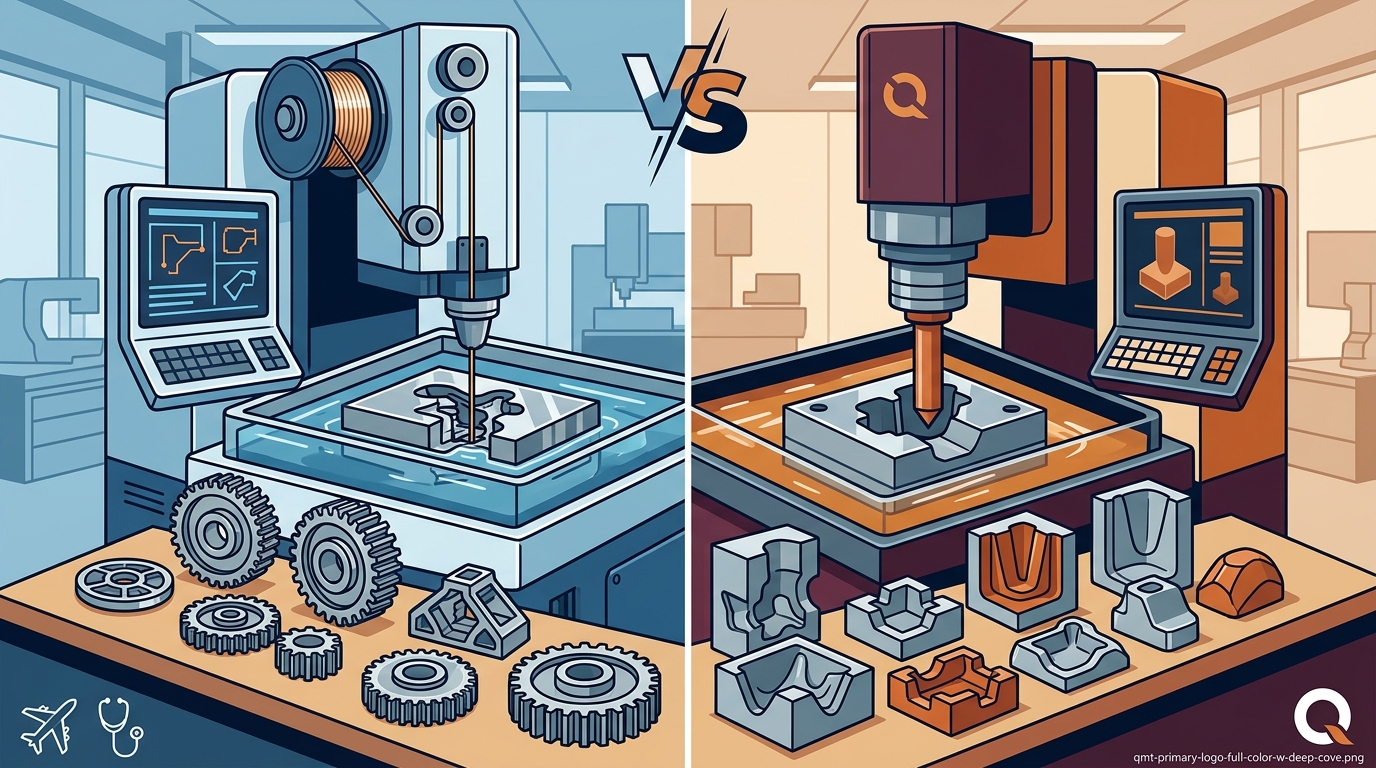
Wire EDM, also known as wire-cut EDM, uses a thin, continuously moving brass or zinc-coated wire as the electrode. This wire acts as a cutting tool, slicing through the workpiece with extreme accuracy. The process is particularly renowned for its ability to create intricate shapes and sharp internal corners that are impossible to achieve with rotating cutters.
Key Advantages of Wire EDM
The primary strength of wire EDM lies in its versatility and precision. It can machine complex profiles with tolerances measured in microns. This makes it ideal for prototyping and low-volume production runs where tooling costs for traditional methods would be prohibitive. Additionally, wire EDM can handle hardened materials directly, eliminating the need for heat treatment after machining. This saves time and reduces the risk of warping.
According to recent manufacturing efficiency reports, workshops utilizing wire EDM for tool and die making often see a 30% reduction in lead times for complex components. The ability to machine hardened steel directly is a game-changer for durability and accuracy. QMT Machinery offers a range of wire cutters that cater to both general engineering and specialized industrial applications. Our lineup includes machines from trusted global brands that ensure consistent performance and reliability.
Ideal Applications
Wire EDM is best suited for:
- Creating precise punches and dies for stamping operations.
- Machining intricate geometries for aerospace components.
- Producing parts with tight tolerances from hardened materials.
- General engineering workshops requiring high flexibility.
Sinker EDM: Volume and Detail
Sinker EDM, also referred to as ram EDM or die-sinking EDM, uses a pre-shaped electrode, typically made of copper or graphite, to erode the workpiece. The electrode is lowered into the workpiece, and the electrical discharge removes material in the exact shape of the electrode. This process is particularly effective for creating complex cavities and molds.
Key Advantages of Sinker EDM
The main advantage of sinker EDM is its ability to produce complex 3D shapes with high repeatability. It is the go-to technology for mold making in the plastics and automotive industries. Sinker EDM can create intricate details, such as text, logos, and fine textures, directly into the mold surface. This capability is crucial for industries that require specific surface finishes on their final products.
Data from industry benchmarks indicates that sinker EDM is indispensable for high-volume mold production where consistency is paramount. The process allows for the creation of deep, narrow cavities that are difficult to machine otherwise. QMT Machinery partners with leading manufacturers to provide sinker EDM solutions that meet the rigorous demands of Australian workshops. Our die-sinking and drilling EDMs are designed for durability and precision, ensuring long-term value for your investment.
Ideal Applications
Sinker EDM is best suited for:
- Injection molding and blow molding tooling.
- Creating complex cavities for automotive parts.
- Producing electrodes for secondary machining operations.
- Adding fine details and textures to surfaces.
Key Differences and Applications
Understanding the core differences between wire EDM and sinker EDM is crucial for making an informed decision. While both technologies use electrical discharge to remove material, their mechanisms and optimal use cases differ significantly. The table below summarizes the key distinctions.
| Feature | Wire EDM | Sinker EDM |
|---|---|---|
| Electrode Type | Thin, continuous wire | Pre-shaped copper or graphite electrode |
| Primary Use | Cutting profiles and intricate shapes | Creating cavities and molds |
| Material Removal | 2D profile cutting | 3D cavity erosion |
| Surface Finish | High precision, smooth finish | Dependent on electrode material and finish |
| Best For | Tool and die making, prototypes | Mold making, mass production components |
For many Australian workshops, the decision comes down to the specific parts they produce. If your focus is on cutting hardened steel for tooling, wire EDM is likely the better choice. If your work involves creating molds for plastic injection, sinker EDM will provide the necessary detail and repeatability. QMT Machinery offers expert guidance to help you navigate these options. Visit our products page to explore our full range of EDM machines.
How to Choose the Right Machine
Selecting the right EDM machine requires a careful assessment of your workshop's needs. Consider the following factors:
- Part Geometry: Do you need to cut complex profiles or create deep cavities?
- Material Hardness: Are you machining hardened steels or softer alloys?
- Production Volume: Is your focus on low-volume prototyping or high-volume production?
- Surface Finish Requirements: What level of precision and finish is required?
- After-Sales Support: Do you have access to reliable service and spare parts?
At QMT Machinery, we believe that quality machines should not come with a premium price tag. We bridge the gap between low-cost imports and high-end OEMs by offering reliable, high-performance equipment. Our commitment to market-leading service means that you are not just buying a machine; you are partnering with a team that values your success. We provide expert technicians, genuine parts, and long-term support to ensure your investment pays off.
For more insights on selecting the right machine tools, check out our blog where we discuss topics like coolant selection and workshop efficiency. You can also watch our video library for practical demonstrations of our machines in action.
Key Takeaways
- Wire EDM uses a continuous wire for cutting intricate 2D profiles, while sinker EDM uses a shaped electrode for 3D cavities.
- Wire EDM is ideal for tool and die making and machining hardened materials.
- Sinker EDM is essential for injection molding and creating complex mold details.
- QMT Machinery has served the Australian market since 1967, providing trusted machine tools.
- Both technologies offer high precision and can machine materials that are difficult to cut traditionally.
- Choosing the right machine depends on your specific part geometry and production volume.
- QMT offers market-leading service and support for all its machinery.
Frequently Asked Questions
What is the main difference between wire EDM and sinker EDM?
Wire EDM uses a thin, moving wire to cut 2D profiles, while sinker EDM uses a pre-shaped electrode to erode 3D cavities into the workpiece.
Which EDM machine is better for mold making?
Sinker EDM is generally preferred for mold making because it can create complex 3D cavities and fine details that are difficult to achieve with wire EDM.
Can wire EDM machine hardened materials?
Yes, wire EDM is highly effective at machining hardened materials directly, which eliminates the need for heat treatment after machining.
What materials are used for EDM electrodes?
Sinker EDM typically uses copper or graphite electrodes. Wire EDM uses a continuous wire made of brass or zinc-coated brass.
How does QMT Machinery support its customers?
QMT Machinery provides market-leading service, including expert technicians, genuine spare parts, and remote diagnostics to ensure your machines run efficiently.
Is EDM suitable for prototyping?
Yes, wire EDM is particularly well-suited for prototyping because it does not require custom tooling, allowing for quick and cost-effective production of complex parts.
What brands does QMT Machinery offer?
QMT Machinery partners with global brands such as King Rich and Vision Wide to provide high-quality machine tools backed by local expertise.
Ready to Upgrade Your Workshop?
Investing in the right EDM machine can transform your workshop's capabilities and efficiency. Whether you need a wire cutter for precision profiling or a sinker EDM for complex mold making, QMT Machinery has the solution. Our team of experts is ready to help you find the perfect machine for your needs. Contact us today to discuss your requirements or request a brochure to learn more about our products. Visit our contact page to get started.