
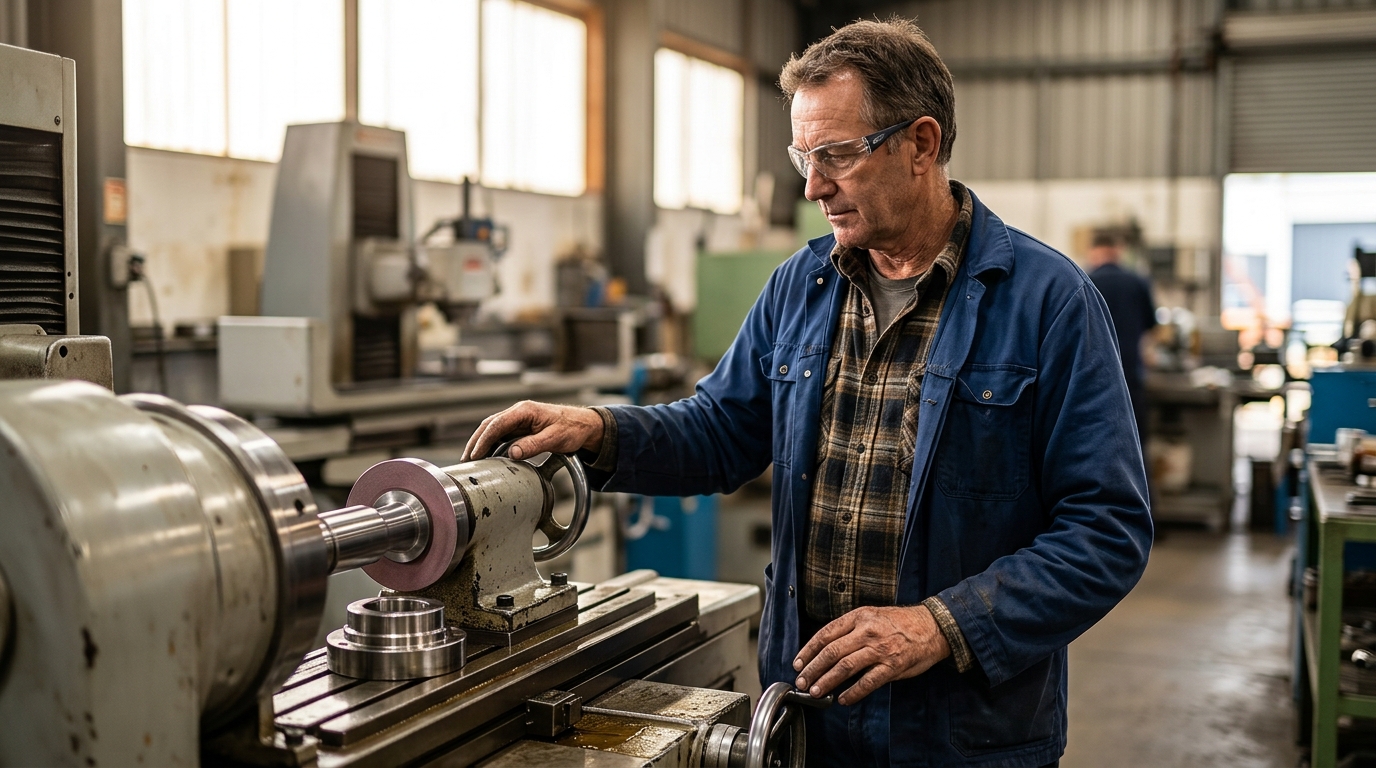
Choosing the right grinding equipment is one of the most critical capital decisions a workshop manager can make. The difference between a cylindrical grinder and a surface grinder is not just about shape; it is about the fundamental geometry of your production workflow. According to industry analysis, precision machining shops that invest in the correct grinding technology see a 30% reduction in secondary operations and significantly lower scrap rates. This guide breaks down the mechanical differences, operational strengths, and ideal applications for each machine type to help you make an informed decision. (QMT Machinery Quality Machine)
What Is Cylindrical Grinding?
Cylindrical grinding is a machining process that uses an abrasive wheel to remove material from the exterior of a workpiece. The term "cylindrical" refers to the rotational symmetry of the parts being processed. This machine is designed to hold the workpiece between centers or on a chuck, rotating it while the grinding wheel moves along the axis to create precise diameters.
Cylindrical grinding is the process of shaping the outer diameter of a rotating workpiece to exact tolerances. It is the go-to solution for producing shafts, pins, bushings, and any component that requires a round profile. The precision achieved in this process is often measured in microns, making it essential for high-performance automotive and aerospace components.
At QMT Machinery, we offer a range of cylindrical grinders that cater to various workshop sizes. Whether you need a manual unit for low-volume precision work or a CNC model for high-volume production, the core principle remains the same: rotating the part against a stationary abrasive wheel to achieve a flawless finish.
What Is Surface Grinding?
Surface grinding, by contrast, focuses on creating flat, smooth surfaces on a workpiece. The workpiece is held stationary on a magnetic chuck or a vise, while the grinding wheel rotates and traverses across the top of the material. This process is analogous to sanding wood, but with industrial-grade abrasives and micron-level accuracy.
Surface grinding is the process of flattening and smoothing the top face of a stationary workpiece using a rotating abrasive wheel. It is indispensable for manufacturing dies, molds, jigs, fixtures, and any part that requires a precise mating surface. The flatness achieved in surface grinding ensures that components fit together seamlessly in complex assemblies.
QMT Machinery provides a comprehensive selection of surface grinders from leading global brands. These machines are engineered to handle everything from small, delicate components to large, heavy industrial plates, ensuring that your workshop can tackle a wide variety of flatness requirements.
Key Differences in Operation
While both machines use abrasive wheels to remove material, their operational mechanics and intended outcomes are fundamentally different. Understanding these differences is crucial for selecting the right tool for your specific manufacturing needs.
Workpiece Geometry
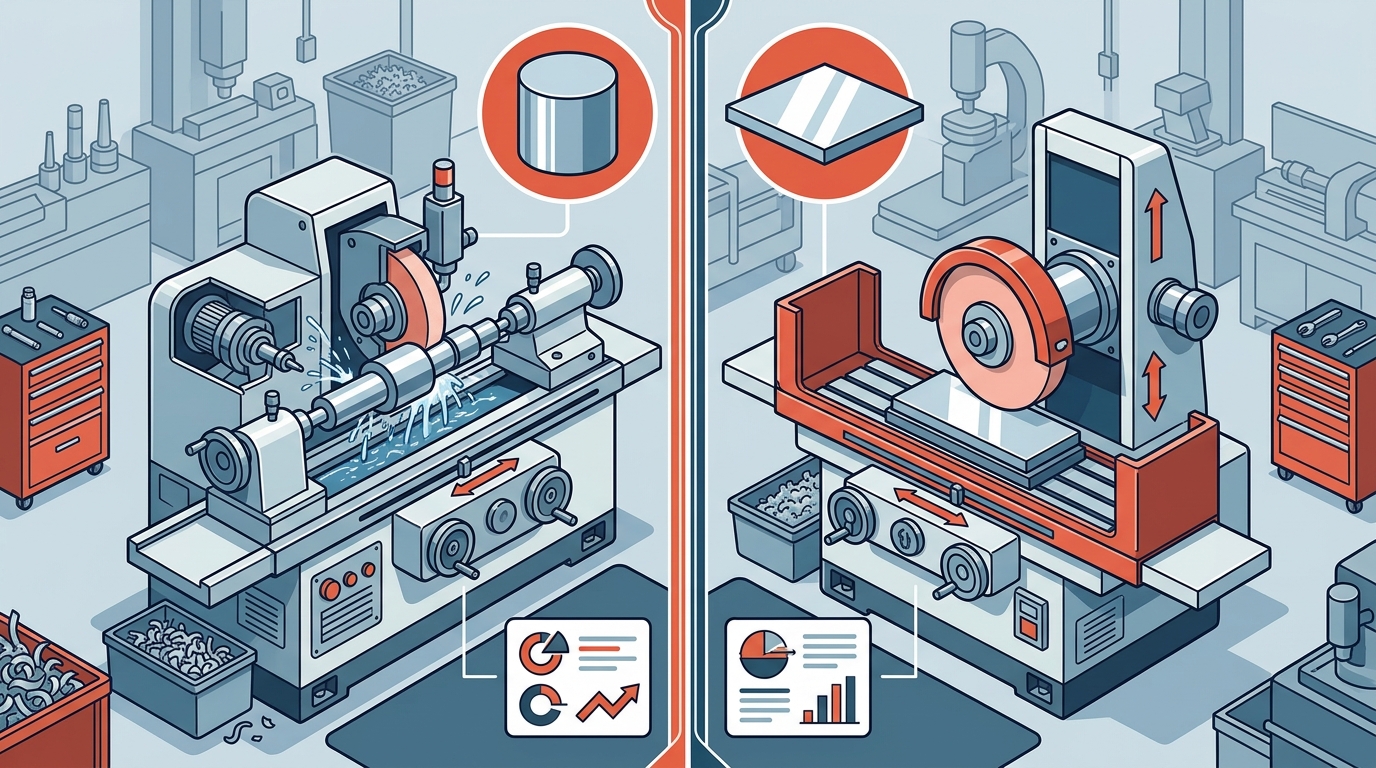
The most obvious difference is the shape of the part. Cylindrical grinders are designed for rotational symmetry. If your part has a round cross-section, a cylindrical grinder is the appropriate choice. Surface grinders are designed for prismatic or block-like parts. If your part has flat faces that need to be machined, a surface grinder is the correct tool.
Workholding Mechanism
Cylindrical grinders typically use centers, chucks, or collets to hold the workpiece. This allows the part to rotate at high speeds while the grinding wheel moves along its length. Surface grinders use magnetic chucks or vises to hold the workpiece firmly in place. The workpiece does not rotate; instead, the grinding table moves the part under the wheel.
Accuracy and Tolerance
Both machines can achieve extremely high levels of accuracy. However, cylindrical grinders are specialized for concentricity and roundness. They ensure that the outer diameter is perfectly centered around the internal bore. Surface grinders are specialized for flatness and parallelism. They ensure that the top surface is perfectly flat relative to the bottom surface.
When to Choose Cylindrical Over Surface
Choosing a cylindrical grinder is the right decision when your production requirements involve rotational parts. Here are some specific scenarios where a cylindrical grinder excels:
- Shaft Manufacturing: If you produce drive shafts, camshafts, or crankshafts, a cylindrical grinder is essential for achieving the required surface finish and dimensional accuracy.
- Precision Pins and Bushings: Components that require tight tolerances on their diameter, such as hydraulic piston pins or bearing bushings, are best suited for cylindrical grinding.
- Concentricity Requirements: When the relationship between the outer diameter and the inner bore is critical, a cylindrical grinder ensures that the part is perfectly centered.
For more information on our cylindrical grinding solutions, visit our product page to explore the specific models available.
When to Choose Surface Over Cylindrical
Choosing a surface grinder is the right decision when your production requirements involve flat surfaces. Here are some specific scenarios where a surface grinder excels:
- Die and Mold Making: The creation of injection molds, die-casting dies, and stamping dies requires extremely flat and smooth surfaces. Surface grinders are the primary tool for this application.
- Jig and Fixture Manufacturing: Components that serve as guides or holders for other machining operations must have precise flat surfaces to ensure accuracy. Surface grinders provide this flatness.
- Parallelism and Flatness: When the relationship between two parallel faces is critical, a surface grinder ensures that the top face is perfectly parallel to the bottom face.
Explore our range of surface grinders to find the model that best fits your workshop's capacity and precision needs.
Comparison Summary
The following table summarizes the key differences between cylindrical and surface grinders to help you make a quick comparison.
| Feature | Cylindrical Grinder | Surface Grinder |
|---|---|---|
| Primary Shape | Cylindrical / Rotational | Flat / Prismatic |
| Workpiece Motion | Rotates against the wheel | Stationary on magnetic chuck |
| Key Tolerance | Diameter, Roundness, Concentricity | Flatness, Parallelism, Surface Finish |
| Common Applications | Shafts, Pins, Bushings | Dies, Molds, Jigs, Fixtures |
| Workholding | Centers, Chucks, Collets | Magnetic Chuck, Vise |
Key Takeaways
- QMT Machinery History: Founded in 1967, QMT has over four decades of experience providing machine tools to Australian workshops.
- Cylindrical Grinding: Used for rotating parts like shafts and pins, focusing on diameter and concentricity.
- Surface Grinding: Used for flat parts like dies and molds, focusing on flatness and parallelism.
- Workholding Difference: Cylindrical grinders rotate the part; surface grinders hold the part stationary.
- Brand Partnerships: QMT partners with global brands like King Rich and Vision Wide to ensure quality and reliability.
- Service Commitment: QMT provides market-leading service, including remote diagnostics and expert technical support.
- Value Proposition: QMT bridges the gap between low-cost imports and high-end OEMs, offering unmatched value.
Frequently Asked Questions
Can a surface grinder be used for cylindrical parts?
No, a surface grinder is not designed for cylindrical parts. It is optimized for flat surfaces. Using it for cylindrical parts would result in poor accuracy and potential safety hazards due to improper workholding.
Can a cylindrical grinder be used for flat surfaces?
While some cylindrical grinders have attachments for face grinding, they are not as efficient or accurate as a dedicated surface grinder for large flat surfaces. A surface grinder is the preferred tool for this task.
What is the difference between a manual and CNC cylindrical grinder?
A manual cylindrical grinder requires the operator to control the feed and depth of cut by hand. A CNC cylindrical grinder uses computer-controlled axes to automate the process, offering higher precision and repeatability for high-volume production.
What is the difference between a manual and CNC surface grinder?
A manual surface grinder requires the operator to control the table movement and wheel position by hand. A CNC surface grinder automates these movements, allowing for complex profiles and consistent results with minimal operator intervention.
How do I choose between a cylindrical and surface grinder?
The choice depends on the geometry of your parts. If your parts are round and require precise diameters, choose a cylindrical grinder. If your parts are block-like and require flat surfaces, choose a surface grinder.
Does QMT Machinery offer service and support?
Yes, QMT Machinery provides market-leading service, including expert technical support, spare parts, and remote diagnostics to ensure your machines are always running at peak performance.
What brands does QMT Machinery carry?
QMT Machinery partners with reputable global brands such as King Rich and Vision Wide, ensuring that customers have access to high-quality, reliable machine tools.
Contact QMT Machinery
Ready to upgrade your workshop with the right grinding machine? QMT Machinery is here to help you find the perfect solution for your manufacturing needs. With over 40 years of experience and a commitment to quality, we are your trusted partner in precision machining.
Contact our team today to discuss your requirements or request a quote for our range of cylindrical and surface grinders. Visit our About Us page to learn more about our history and values.