
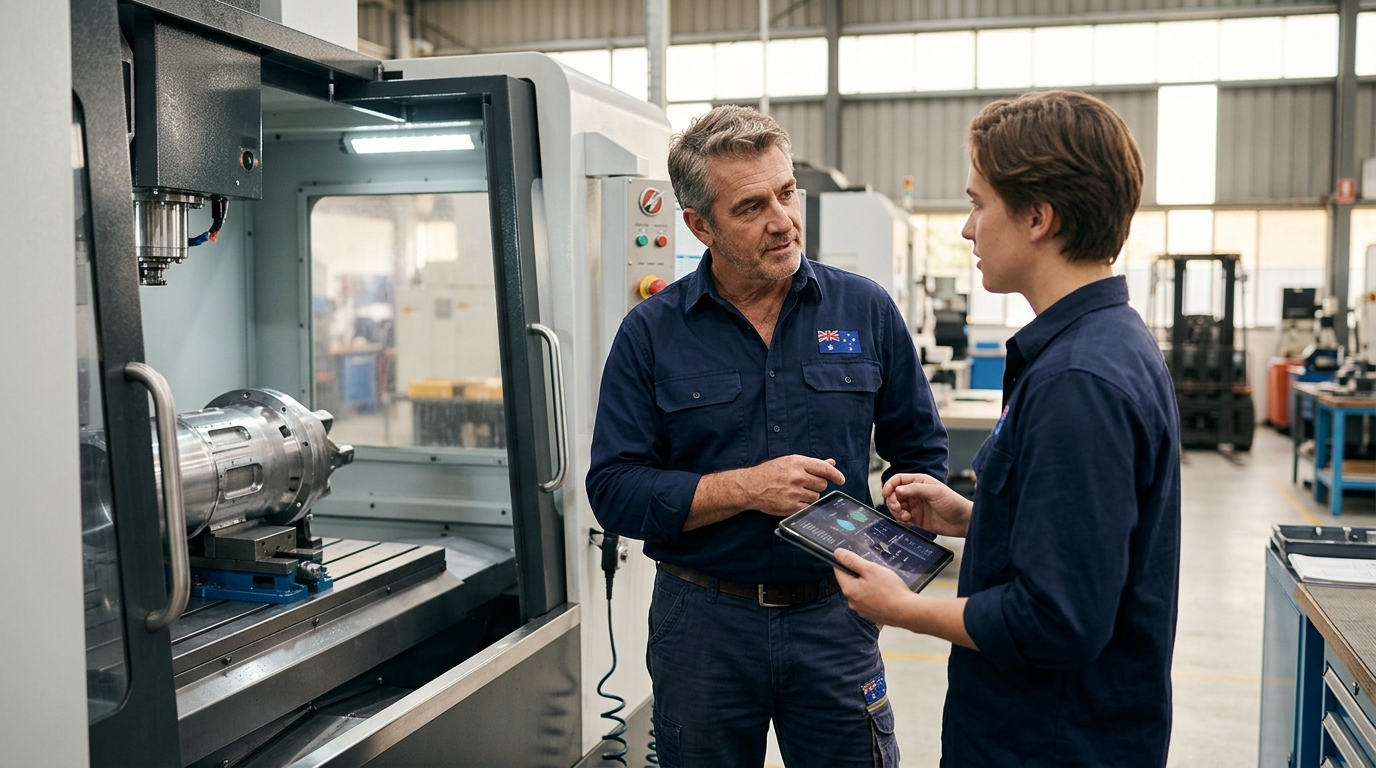
Investing in industrial machinery is a capital-intensive decision that defines the operational capacity of any Australian manufacturing business. Founded in 1967, QMT Machinery has witnessed decades of technological shifts in the machining sector. The industry now demands equipment that balances precision with cost-efficiency. According to recent market analyses, workshops that upgrade to modern CNC systems often see a significant increase in productivity within the first year of operation. This guide provides the definitive framework for selecting the correct machine tool for your specific needs.
Understanding Your Machining Needs
Before evaluating hardware specifications, you must define the operational scope of your workshop. The right machine tool depends entirely on the materials you process and the tolerances you require. ISO standards dictate strict tolerances for aerospace and automotive components. Workshops serving these sectors cannot compromise on rigidity or thermal stability. (Brands QMT Machinery)
Consider the volume of production. High-volume manufacturing benefits from automated turning centres, while low-volume, high-complexity jobs often require the flexibility of a manual milling machine. Recent manufacturing trends indicate a shift toward hybrid workflows that combine manual setup with CNC execution. This approach reduces lead times while maintaining the adaptability needed for custom engineering projects.
Milling vs. Turning: Core Differences
The fundamental choice in machine tools lies between milling and turning operations. Each process serves distinct geometric requirements and material removal strategies.
Milling Machines
A milling machine removes material from a stationary workpiece using a rotating cutter. This process is essential for creating complex 3D contours, slots, and holes. Industry experts define milling as the primary method for producing flat surfaces and intricate profiles. QMT Machinery offers a range of manual and CNC milling centres to suit varying levels of precision.
Turning Machines
Turning involves rotating the workpiece against a stationary cutting tool. This method is ideal for producing cylindrical parts, shafts, and cones. Technical data shows that turning operations can achieve tighter concentricity tolerances than milling for rotational symmetry. Whether you need a manual lathe for general engineering or a high-speed CNC lathe for aerospace components, the choice depends on your part geometry.
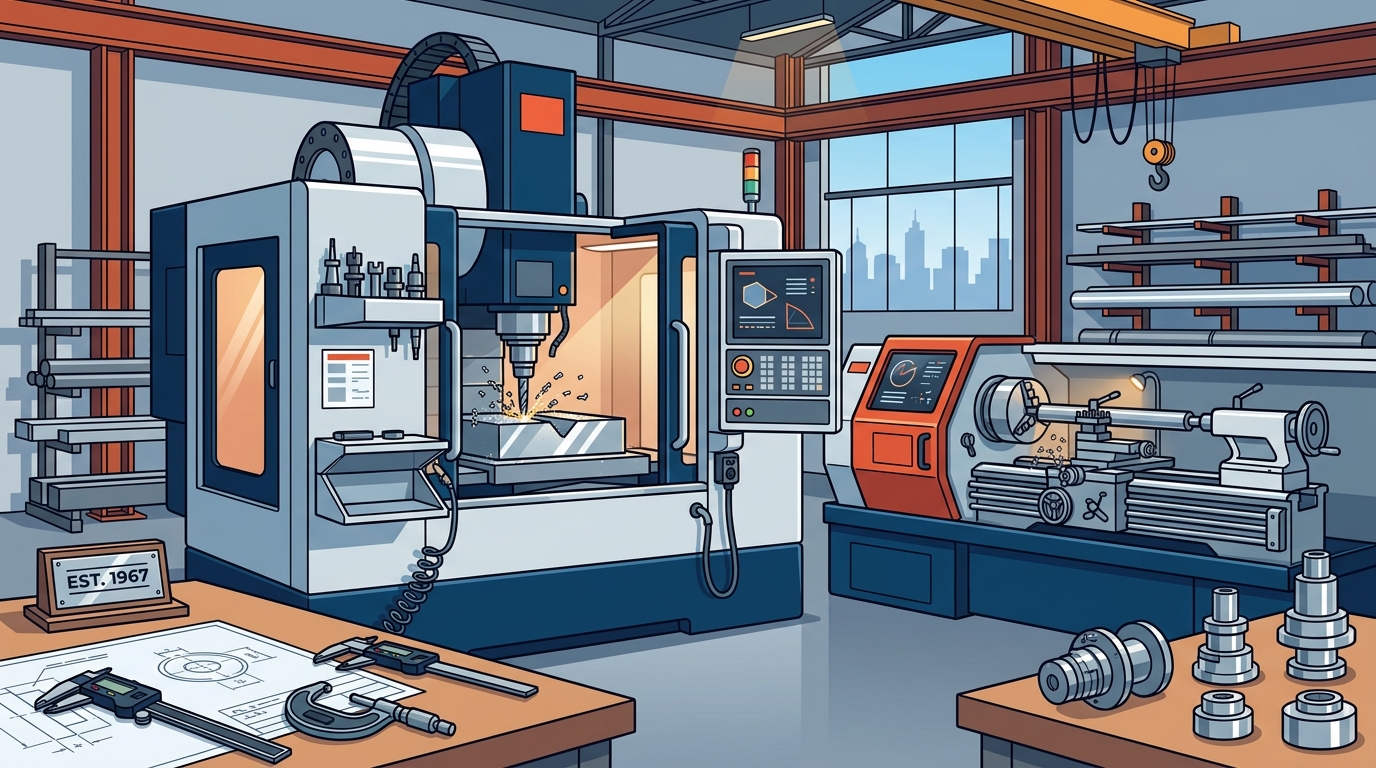
CNC vs. Manual: The Automation Debate
The decision between Computer Numerical Control (CNC) and manual operation is critical for long-term profitability. CNC machines offer repeatability and speed, while manual machines provide versatility and lower initial costs.
The Case for CNC
CNC machining centres automate the cutting process through programmed instructions. This automation reduces human error and allows for unattended operation during long runs. Forbes reports that CNC adoption has increased operational efficiency by up to 30% in small to medium enterprises. The initial investment is higher, but the return on investment comes through reduced scrap rates and increased throughput.
The Value of Manual Machines
Manual lathes and milling machines remain indispensable for toolroom work, repairs, and one-off prototypes. They allow the operator to make real-time adjustments based on tactile feedback. Engineering journals note that manual machines are often more cost-effective for low-volume production where programming time would outweigh machining time. QMT Machinery continues to supply high-quality manual lathes from brands like King Rich, ensuring that workshops have reliable options for general engineering tasks.
Key Brands and Value Propositions
QMT Machinery partners with global brands that meet stringent qualification processes. These brands are proven through decades of industry experience and are supported by service teams you can actually speak with.
King Rich
King Rich is a trusted name in the Australian workshop community. Their machines are known for durability and accuracy. King Rich technology focuses on robust construction to withstand daily use in general engineering environments. This brand is particularly popular for manual lathes and milling machines that require consistent performance without excessive maintenance.
Vision Wide and Other Global Partners
QMT bridges the gap between low-cost imports and high-end OEMs. By partnering with brands like Vision Wide, QMT offers reliable, high-performance equipment that delivers real value. Industry rankings often highlight these brands for their balance of cost and performance. This approach ensures that workshops of all sizes can access world-class machinery without compromising on quality.
The Critical Role of After-Sales Service
Buying the machine is only the first step. The longevity of your investment depends on the support network behind it. QMT Machinery stands behind every machine with relentless support, expert technicians, and a commitment to long-term performance.
Remote Diagnostics
Modern service includes internet-based remote diagnostics. This technology allows technicians to troubleshoot issues in real-time, reducing downtime significantly. Recent studies indicate that remote diagnostics can cut service response times by 40%. This capability is crucial for workshops that cannot afford extended periods of inactivity.
Parts and Expertise
Having access to genuine spare parts and expert advice is vital. QMT ensures that every brand they offer is fully backed by local expertise and infrastructure. This commitment means that when you invest in QMT, you are partnering with a team that values your success as much as you do.
Machine Tool Comparison Matrix
The following table summarizes the key differences between common machine tool categories to assist in your decision-making process.
| Machine Type | Best For | Automation Level | Typical Application |
|---|---|---|---|
| Manual Milling Machine | Prototypes, Toolroom Work | Manual | General Engineering, Repairs |
| CNC Machining Centre | High Precision, Complex Parts | Full CNC | Aerospace, Automotive Moulds |
| Manual Lathe | Rotational Parts, Low Volume | Manual | Shafts, Bushings, General Turning |
| CNC Lathe | High Volume, Tight Tolerances | Full CNC | Mass Production, Precision Components |
| EDM Machines | Hard Materials, Complex Cavities | Automated | Mould Making, Die-Sinking |
Key Takeaways
- Historical Reliability: QMT Machinery has served the Australian market since 1967, providing decades of trust and expertise.
- Brand Diversity: Partnerships with brands like King Rich and Vision Wide offer unmatched value and quality.
- Service Excellence: Market-leading service includes remote diagnostics and expert technical support.
- CNC Efficiency: Upgrading to CNC can significantly increase productivity and reduce scrap rates.
- Manual Versatility: Manual machines remain essential for low-volume, high-complexity tasks.
- Global Standards: All partnered brands meet stringent international quality and performance criteria.
- Local Support: Australian-based support ensures rapid response times and genuine parts availability.
Frequently Asked Questions
What is the difference between a manual lathe and a CNC lathe?
A manual lathe requires the operator to control all movements by hand, offering flexibility for one-off jobs. A CNC lathe uses computer programs to automate cutting, providing higher precision and repeatability for mass production.
Why is after-sales service important when choosing a machine tool?
After-sales service ensures that your machine remains operational through timely repairs, genuine parts, and expert maintenance. Industry data confirms that machines with strong service support have longer lifespans and lower total cost of ownership.
Which machine tool is best for mould making?
EDM (Electrical Discharge Machining) machines are often preferred for mould making due to their ability to cut hard materials and create complex geometries. Technical guides explain that EDM allows for precision that traditional cutting tools cannot achieve on hardened steels.
Does QMT Machinery offer remote diagnostics?
Yes, QMT Machinery provides internet-based remote diagnostics to help troubleshoot issues quickly and minimize downtime for your workshop.
What brands does QMT Machinery partner with?
QMT Machinery partners with reputable global brands such as King Rich and Vision Wide, ensuring that customers receive high-quality, reliable machinery.
How do I choose between a milling machine and a turning centre?
Choose a milling machine for creating flat surfaces, slots, and complex 3D shapes. Choose a turning centre for producing cylindrical parts with rotational symmetry.
Is it worth upgrading from manual to CNC machinery?
Upgrading to CNC is often worth it for workshops seeking higher throughput, tighter tolerances, and reduced labor costs. Financial analyses show that the ROI is typically realized within 12 to 24 months for high-volume operations.
Contact QMT Machinery
Ready to upgrade your workshop with world-class machinery? Contact QMT Machinery today to discuss your specific needs and explore our range of milling, turning, and EDM machines. Visit our contact page or call us at +61 03 9587 8788 to speak with our experienced team.