Electrical Discharge Machining (EDM) has fundamentally transformed precision manufacturing across Australia. Wire EDM or sinker EDM remains the critical decision point for workshop owners seeking micron-level accuracy. According to industry data, precision machining requirements have increased by over 40% in the last decade due to aerospace and medical device demands. This guide breaks down the operational differences to help you select the optimal equipment for your specific manufacturing needs.
How Wire and Sinker EDM Work
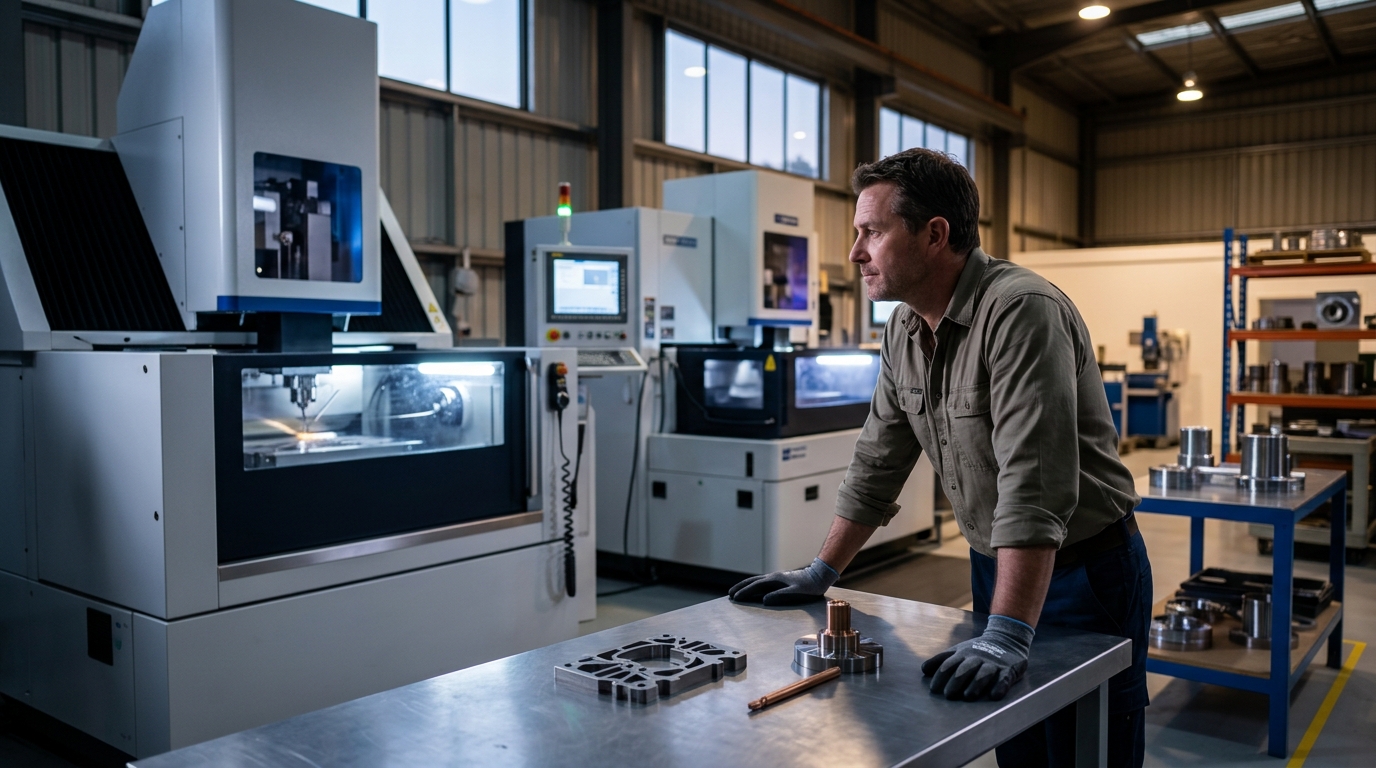
Understanding the fundamental mechanics of each process is the first step in making an informed investment. Both methods utilize electrical erosion to remove material, but the delivery mechanism differs significantly. (QMT Machinery Quality Machine)
The Wire EDM Process
A continuous, thin brass or zinc-coated wire acts as the electrode. This wire is fed from a spool and passes through the workpiece, cutting complex 2D profiles. The wire never touches the material directly. Instead, a dielectric fluid flushes the gap while high-frequency sparks erode the metal. This process allows for intricate internal cutouts without pre-drilling holes. (Blog QMT Machinery)
The Sinker EDM Process
Sinker EDM, also known as die-sinking EDM, uses a custom-shaped electrode made of copper or graphite. This electrode is lowered into the workpiece like a stamp. The shape of the electrode is the negative of the desired cavity. As the electrode contacts the material through controlled sparks, it creates a precise 3D impression. This method is ideal for complex molds and dies.
Key Differences in Application
The choice between these technologies depends entirely on the geometry of the part you need to produce. Each machine type excels in specific manufacturing scenarios.
Geometry and Complexity
Wire EDM is superior for 2D profiling and thin-part cutting. It can produce sharp internal corners and intricate shapes that are impossible with traditional milling. Sinker EDM is the only option for creating deep, complex 3D cavities. It is the standard for injection molding tools and forging dies.
Surface Finish and Tolerance
Both methods achieve exceptional surface finishes. Wire EDM can produce mirror-like finishes on conductive materials. Sinker EDM allows for controlled surface textures, which are critical for mold release in plastic injection. Tolerances for both can reach within microns, ensuring high-precision components.
Speed and Efficiency
Wire EDM is generally faster for cutting through thick plates with simple profiles. Sinker EDM can be slower due to the need for custom electrode fabrication. However, modern Sinker EDM machines with automated electrode changers have significantly reduced cycle times.
Material Compatibility and Conductivity
EDM is unique because it can machine any electrically conductive material, regardless of hardness. This is a critical advantage over traditional cutting tools.
Hardened Steels and Alloys
Both wire and sinker EDM can machine hardened steels, titanium, and inconel without tool wear. This eliminates the need for heat treatment after machining, saving time and reducing distortion risks. According to manufacturing reports, hardening before EDM reduces post-processing costs by up to 30%.
Non-Conductive Materials
Neither wire nor sinker EDM can machine non-conductive materials like glass, ceramic, or plastic. For these materials, traditional milling or laser cutting remains the only viable option. Always verify material conductivity before selecting an EDM process.
Cost Analysis and ROI
Investing in EDM machinery requires a clear understanding of total cost of ownership. Initial purchase price is only one component of the financial equation.
Initial Investment
Wire EDM machines typically range from moderate to high cost depending on axis configuration and automation. Sinker EDM machines vary widely based on electrode handling capabilities. High-end models with robotic changers command a premium but offer greater productivity.
Operational Costs
Wire EDM consumes wire and dielectric fluid. Sinker EDM requires electrode material and machining time. Both processes require regular maintenance of filters and pumps. QMT Machinery offers competitive pricing on both categories to ensure unmatched value for Australian workshops.
Long-Term Value
EDM machines have long lifespans if maintained properly. QMT Machinery has served the Australian market since 1967, providing reliable support and parts. This longevity ensures a strong return on investment for workshop owners.
QMT Machinery Brand Partners
QMT Machinery partners with world-class manufacturers to deliver global brands backed by Aussie hands. Our lineup includes King Rich and Vision Wide, known for reliability and precision.
| Feature | Wire EDM | Sinker EDM |
|---|---|---|
| Primary Use | 2D Profiling, Thin Parts | 3D Cavities, Molds, Dies |
| Electrode Type | Continuous Wire | Custom Copper/Graphite |
| Complexity | High (Internal Cutouts) | Very High (3D Shapes) |
| Material Hardness | Any Conductive Material | Any Conductive Material |
| QMT Brand Example | King Rich Wire Cutters | Vision Wide Die-Sinking EDMs |
Key Takeaways
- Wire EDM is ideal for 2D profiles and intricate internal cutouts in conductive materials.
- Sinker EDM is essential for creating complex 3D cavities, molds, and dies.
- Both processes can machine hardened steels and alloys without tool wear.
- QMT Machinery has served the Australian manufacturing sector since 1967.
- King Rich and Vision Wide are trusted brands available through QMT.
- Remote diagnostics and expert support are critical for minimizing downtime.
- Choosing the right machine depends on your specific part geometry and production volume.
Frequently Asked Questions
What is the main difference between wire EDM and sinker EDM?
Wire EDM uses a continuous thin wire to cut 2D profiles, while sinker EDM uses a custom-shaped electrode to create 3D cavities.
Can EDM machine hardened steel?
Yes, both wire and sinker EDM can machine any electrically conductive material, including hardened steel, without tool wear.
Which QMT Machinery brand is best for wire cutting?
King Rich is a trusted brand for wire cutters, offering reliable performance for Australian workshops.
How does QMT support EDM machine owners?
QMT provides market-leading service, including remote diagnostics, expert technicians, and genuine parts support.
Is sinker EDM suitable for mold making?
Yes, sinker EDM is the industry standard for creating complex injection molds and forging dies.
What materials cannot be EDM machined?
Non-conductive materials like glass, ceramic, and plastic cannot be machined using EDM processes.
Does QMT Machinery offer training?
QMT provides comprehensive support and training resources to help operators maximize machine performance.
Contact QMT Machinery
Ready to upgrade your workshop with precision EDM technology? Contact QMT Machinery today to discuss your specific needs. Our experienced team can help you select the right machine from our range of King Rich and Vision Wide products. Visit our contact page to get started.