
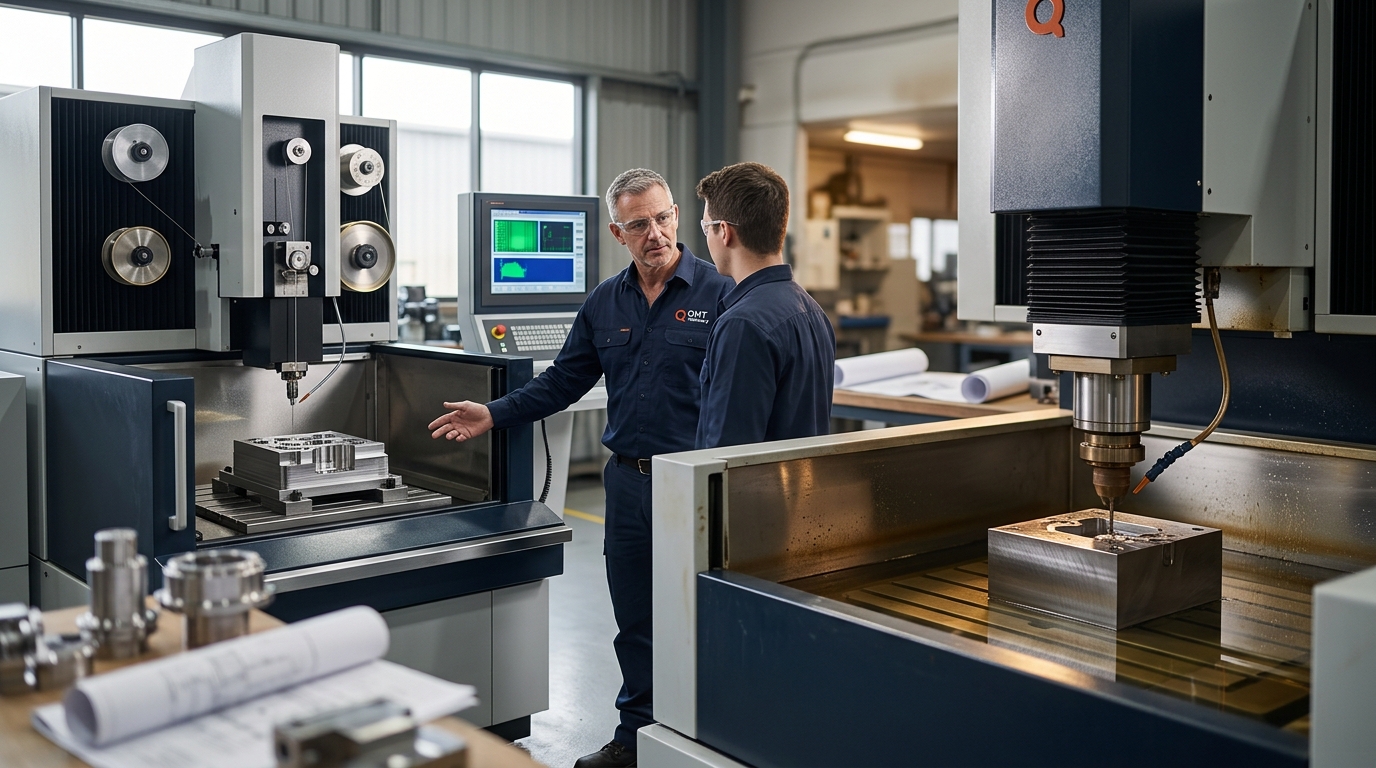
Choosing the right electrical discharge machining (EDM) technology is one of the most critical capital decisions an Australian workshop can make. Wire EDM or sinker EDM is a common dilemma for engineers seeking precision. The right choice depends entirely on your specific geometry requirements, material hardness, and production volume. This guide breaks down the operational differences to help you select the optimal equipment for your manufacturing goals.
Core Mechanisms and Operational Differences
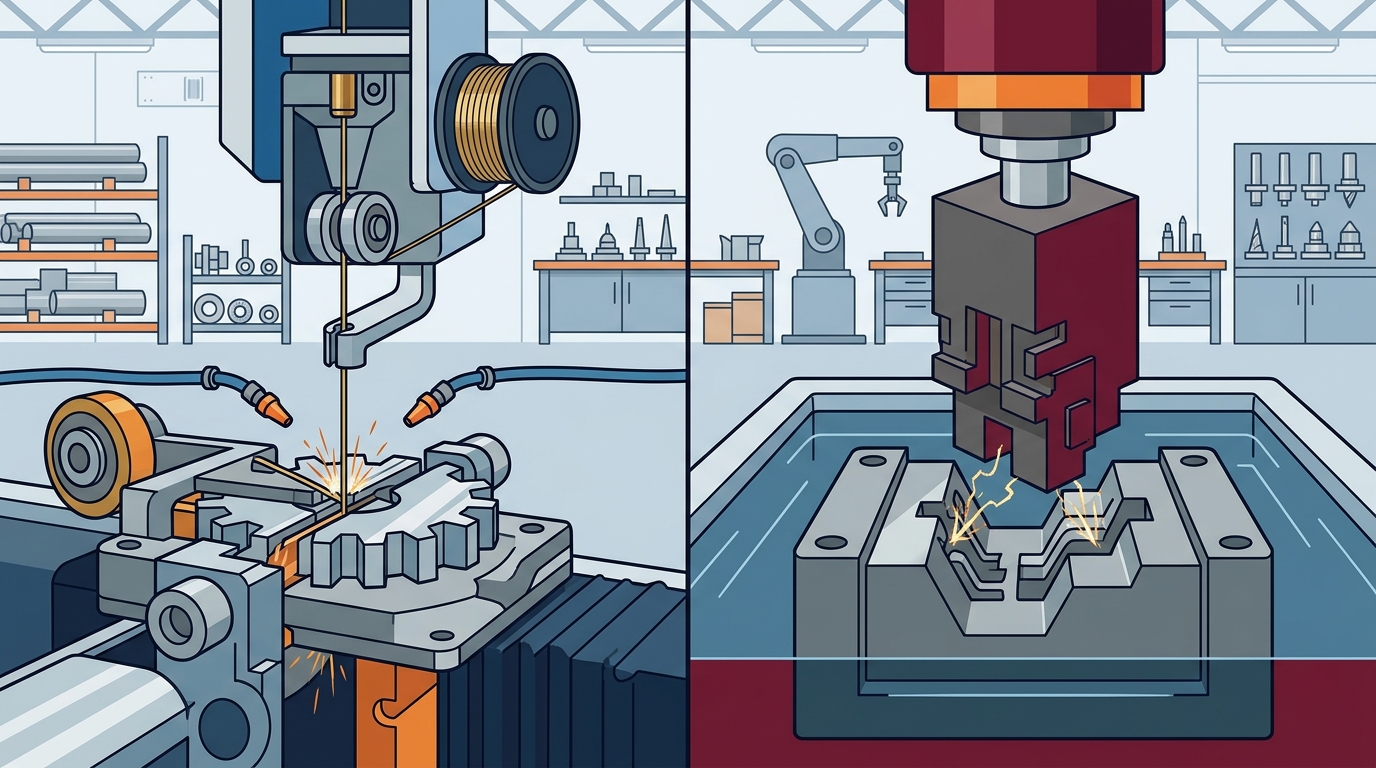
Both wire and sinker EDM machines remove material using electrical sparks, but their methods of delivery differ fundamentally. Wire EDM is a through-cutting process that uses a thin, continuously moving wire electrode to slice through conductive materials. This allows for intricate 2D profiles and complex contours that traditional cutting tools cannot achieve. (QMT Machinery Quality Machine)
Conversely, sinker EDM is a form-cutting process that uses a pre-shaped electrode, often made of copper or graphite, to plunge into the workpiece. This method is ideal for creating 3D cavities, molds, and dies. Understanding these mechanical distinctions is vital for determining which technology aligns with your workshop's daily operational needs. (Blog QMT Machinery)
Wire EDM: Precision and Complexity
Wire electrical discharge machining is renowned for its ability to produce extremely tight tolerances and superior surface finishes. It operates by guiding a brass or zinc-coated wire through the material using a series of pulleys and tensioners. The wire acts as the electrode, eroding the workpiece along a programmed path.
This technology is particularly effective for hard materials that are difficult to machine with conventional tools. According to industry data, wire EDM can handle materials with hardness up to 60 HRC without compromising tool integrity. This makes it an indispensable tool for aerospace components, medical implants, and precision tooling.
At QMT Machinery, we offer a range of wire cutters that cater to various workshop sizes. Our inventory includes high-precision models designed for intricate die-making and general engineering applications. The flexibility of wire EDM allows for the creation of sharp internal corners and complex geometries that are impossible with milling or turning alone.
Sinker EDM: Depth and Detail
Sinker EDM, also known as ram EDM or die-sinking EDM, is the go-to solution for creating complex 3D cavities. The process involves submerging both the workpiece and the electrode in a dielectric fluid, typically oil or deionized water. A series of rapid electrical discharges between the electrode and the workpiece erode the material, replicating the shape of the electrode.
This method is particularly valuable in the mold and die industry. It allows for the creation of intricate details, textures, and undercuts that are difficult to achieve with other machining methods. Sinker EDM is also excellent for removing hardened steel, which is often required in high-wear applications.
QMT Machinery partners with leading global brands to provide sinker EDM machines that deliver unmatched value and reliability. Our die-sinking and drilling EDMs are designed to withstand the rigors of continuous industrial use. By choosing a reputable brand, you ensure long-term performance and access to expert technical support.
Technical Comparison Matrix
The following table summarizes the key differences between wire EDM and sinker EDM to assist in your decision-making process.
| Feature | Wire EDM | Sinker EDM |
|---|---|---|
| Primary Application | 2D profiles, through-cutting, intricate contours | 3D cavities, molds, dies, undercuts |
| Electrode Type | Continuous thin wire (brass/zinc-coated) | Pre-shaped electrode (copper/graphite) |
| Material Hardness | Excellent for hardened steels (up to 60+ HRC) | Excellent for hardened steels and complex geometries |
| Surface Finish | Very fine, often requires minimal polishing | Depends on electrode material and spark settings |
| Setup Complexity | Requires precise wire tension and alignment | Requires custom electrode fabrication |
| Typical Use Case | Tooling, aerospace parts, precision components | Plastic injection molds, die-casting dies |
How to Choose the Right Machine
Selecting between wire and sinker EDM depends on your specific manufacturing requirements. If your workshop primarily deals with 2D profiles, thin parts, or intricate cutting tasks, wire EDM is the superior choice. It offers greater flexibility and does not require the fabrication of custom electrodes for every new part.
On the other hand, if your focus is on creating molds, dies, or parts with complex 3D cavities, sinker EDM is the necessary tool. It allows for the replication of detailed surfaces and the creation of undercuts that wire EDM cannot achieve. Consider your material hardness, required tolerances, and production volume when making this decision.
QMT Machinery provides expert guidance to help you navigate these choices. Our team understands the unique challenges of the Australian manufacturing sector. We offer market-leading service and outstanding brands to ensure you get the right equipment for your needs. Visit our EDM Machines page to explore our full range of wire cutters and die-sinking EDMs.
Key Takeaways
- Wire EDM is ideal for 2D profiles and through-cutting complex geometries with high precision.
- Sinker EDM is essential for creating 3D cavities, molds, and dies with intricate details.
- Both technologies excel in machining hardened materials that are difficult to process with conventional tools.
- QMT Machinery has served the Australian market since 1967, providing reliable machine tools and support.
- Choosing the right brand ensures long-term performance and access to expert technical assistance.
- Wire EDM does not require custom electrodes, reducing setup time for varied parts.
- Sinker EDM requires custom electrode fabrication but offers superior depth and detail capabilities.
Frequently Asked Questions
What is the main difference between wire EDM and sinker EDM?
Wire EDM uses a thin, moving wire to cut 2D profiles through the material, while sinker EDM uses a shaped electrode to plunge into the material, creating 3D cavities and molds.
Can wire EDM machine hardened steel?
Yes, wire EDM is highly effective for machining hardened steel, often up to 60 HRC or higher, without the need for pre-hardening or extensive tool wear.
Which EDM machine is better for mold making?
Sinker EDM is generally preferred for mold making due to its ability to create complex 3D cavities, undercuts, and detailed surface textures required in injection molds.
Does QMT Machinery offer support for EDM machines?
Yes, QMT Machinery provides comprehensive support, including expert technicians, spare parts, and remote diagnostics to ensure your machines run efficiently.
What materials can be used for EDM electrodes?
Common electrode materials include copper, graphite, and brass. The choice depends on the specific application, required surface finish, and machining speed.
Is EDM suitable for high-volume production?
While EDM is often used for low-to-medium volume production due to setup times, modern wire EDM machines can be highly efficient for repetitive 2D cutting tasks.
How do I choose the right EDM brand?
Consider factors such as brand reputation, local support availability, machine precision, and after-sales service. QMT Machinery partners with top global brands to ensure quality.
Contact QMT Machinery
Ready to upgrade your workshop with the right EDM machine? QMT Machinery offers a wide range of wire cutters and die-sinking EDMs from leading global brands. Our team is ready to assist you in selecting the perfect equipment for your manufacturing needs. Contact us today to discuss your requirements and explore our contact page for more information.