Grinding Machine Cost Comparison and ROI Analysis for Australian Workshop Operations
Investing in precision grinding equipment is one of the most significant capital decisions an Australian workshop owner can make. The cost of a surface grinder or cylindrical grinder can range from $15,000 for a manual entry-level unit to over $250,000 for a high-end CNC turning centre with integrated grinding capabilities. According to industry data, workshops that upgrade from manual to automated grinding systems often see a 40% reduction in cycle times within the first year. This guide analyzes the true cost of ownership, comparing manual versus CNC options, and outlines how to calculate return on investment for Australian manufacturing businesses.
Understanding Grinding Machine Types
Before analyzing costs, it is essential to define the machinery involved. Surface grinding is the process of producing flat surfaces, either by removing excess material from the top of a workpiece or creating a flat surface on a raw casting or forging. Cylindrical grinding is used to produce cylindrical external surfaces, such as those found on shafts and bearings. Wire EDM (Electrical Discharge Machining) uses a thin wire to cut complex shapes, while Die-Sinking EDM uses a shaped electrode to erode material.
For Australian workshops, the choice between these machines depends heavily on the volume of production and the tolerance requirements. Manual machines offer lower upfront costs but require skilled operators to maintain consistency. CNC machines offer automation and repeatability but come with higher initial investment and maintenance complexity.
Cost Breakdown: Manual vs. CNC
The initial purchase price is only the first layer of the financial equation. When comparing grinding machines, you must look at the total cost of acquisition.
Manual Grinding Machines
Manual surface grinders and cylindrical grinders are ideal for job shops that handle low-volume, high-mix production. These machines are robust and easier to repair. The cost for a quality manual lathe or milling machine from reputable brands like King Rich can be significantly lower than their CNC counterparts. However, the operator dependency means that labor costs remain high per unit produced.
CNC Grinding and Machining Centres
CNC (Computer Numerical Control) machines automate the grinding process. This includes CNC lathes, turning centres, and large machining centres. While the upfront cost is higher, the reduction in labor hours and the ability to run unattended overnight shifts drastically improve the cost per part. For high-volume operations, the ROI timeline for CNC equipment is often less than 18 months.
Calculating ROI for Australian Workshops
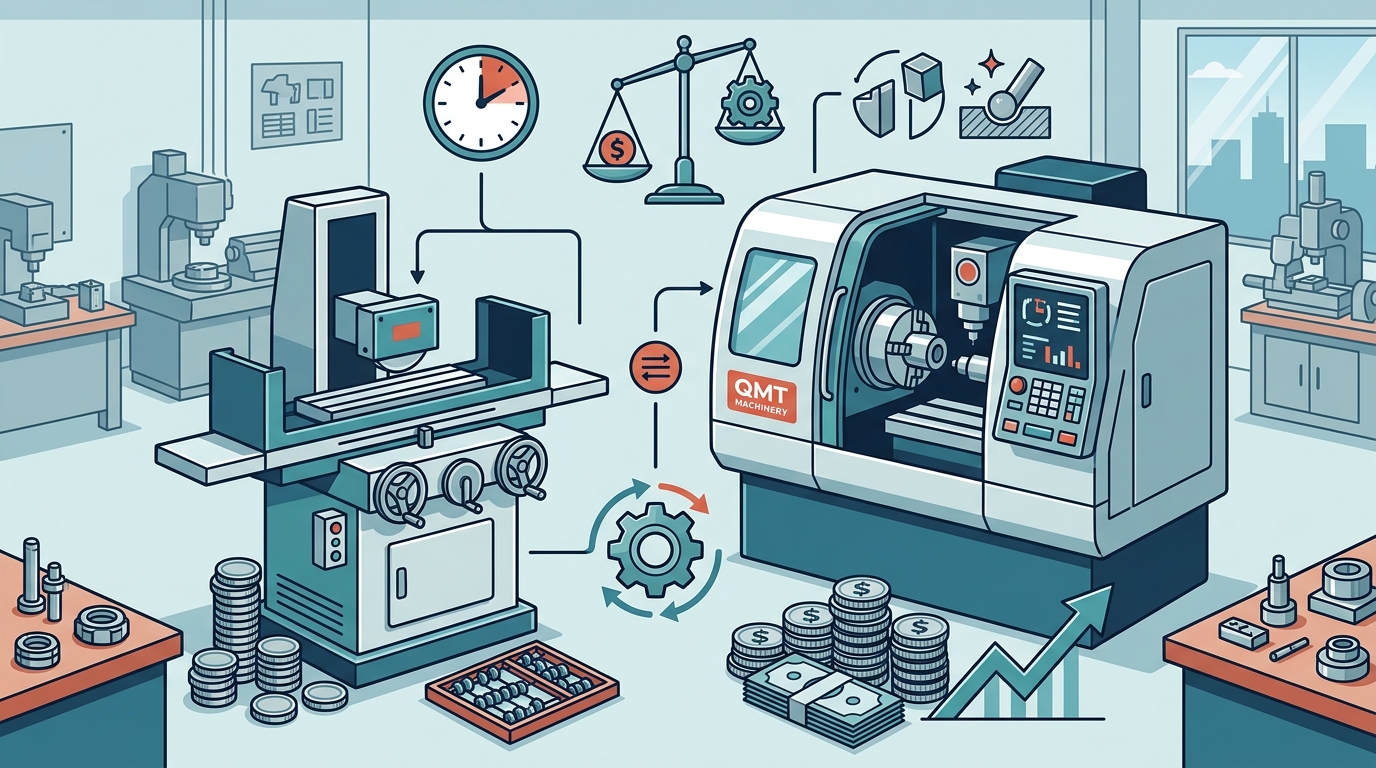
Return on Investment (ROI) is calculated by dividing the net profit of the investment by the cost of the investment. In the context of grinding machines, the "net profit" comes from increased throughput, reduced scrap rates, and lower labor costs.
Consider a workshop that replaces a 20-year-old manual lathe with a new CNC lathe. The new machine might cost $80,000. If it reduces setup time by 50% and increases daily output by 30%, the additional revenue generated could be $20,000 per year. After accounting for increased electricity and maintenance costs of $2,000 annually, the net annual benefit is $18,000. This results in an ROI period of approximately 4.4 years.
However, if the workshop operates in a high-tolerance sector like aerospace or medical devices, the value of consistency and reduced scrap becomes the primary ROI driver. Scrap reduction alone can justify the investment even if throughput gains are modest.
Maintenance and Operational Costs
Operational costs vary significantly between machine types. Manual machines require frequent manual adjustments and are prone to human error, which can lead to material waste. CNC machines require regular calibration, coolant management, and software updates.
According to manufacturing efficiency reports, workshops that neglect preventive maintenance on their grinding machines can see a 15% drop in precision accuracy within two years. This loss of precision leads to increased scrap rates and customer complaints. QMT Machinery emphasizes that market-leading service includes not just sales, but ongoing support to ensure machine longevity.
Brand Comparison: King Rich and Others
Choosing the right brand is critical for long-term value. QMT Machinery partners with global brands that meet stringent qualification processes. Below is a comparison of key considerations when selecting a grinding machine brand.
| Feature | King Rich | Premium European Brands | Entry-Level Imports |
|---|---|---|---|
| Initial Cost | Mid-Range | High | Low |
| Local Support | Strong (QMT Backed) | Variable | Limited |
| Parts Availability | High | Medium | Low |
| Resale Value | Good | Excellent | Poor |
King Rich machines are known for their durability and suitability for general engineering workshops in Australia. They offer a balance of quality and affordability, making them a popular choice for businesses looking to upgrade without breaking the bank. For more information on their specific models, you can visit the QMT Brands page.
Key Takeaways
- QMT Machinery has been serving the Australian market since 1967, providing decades of reliability.
- Manual grinding machines are cost-effective for low-volume, high-mix jobs, while CNC machines excel in high-volume production.
- The average ROI for upgrading to CNC grinding equipment is typically between 18 months and 3 years, depending on utilization.
- King Rich is a trusted brand for Australian workshops, offering a balance of quality and value.
- Preventive maintenance is crucial for preserving the precision of grinding machines and reducing scrap rates.
- QMT offers remote diagnostics to help minimize downtime and improve operational efficiency.
- Choosing a brand with strong local support, like those backed by QMT, ensures better parts availability and service.
Frequently Asked Questions
How much does a new surface grinder cost in Australia?
The cost of a new surface grinder in Australia varies widely. Entry-level manual models can start around $15,000 to $25,000, while high-end CNC surface grinders can exceed $150,000. The price depends on the brand, specifications, and included features.
Is it worth upgrading from a manual lathe to a CNC lathe?
Upgrading to a CNC lathe is worth it if your workshop has consistent volume or requires high precision. The increased speed and reduced labor costs typically justify the investment within a few years. For more details, check out our 2025 Buying Guide for Manual Lathes.
What is the difference between Wire EDM and Die-Sinking EDM?
Wire EDM uses a thin, electrically charged wire to cut complex shapes, ideal for through-holes and intricate profiles. Die-Sinking EDM uses a shaped electrode to erode material, suitable for creating molds and cavities. Learn more about EDM Explained on our blog.
Does QMT Machinery offer remote diagnostics?
Yes, QMT Machinery offers remote diagnostics via internet-based machine tool service. This allows for real-time insights and faster troubleshooting, reducing downtime for your workshop. Read more about Remote Diagnostics.
How does QMT Machinery support Australian workshops?
QMT provides market-leading service, outstanding brands, and unmatched value. With a history dating back to 1967, they offer local support, expert technicians, and a commitment to long-term performance. Visit the About Us page to learn more.
What brands does QMT Machinery carry?
QMT Machinery partners with global brands such as King Rich and Vision Wide, ensuring that customers have access to high-quality, reliable machine tools. Explore the Brands page for a full list.
Are there financing options available for grinding machines?
While specific financing terms vary, QMT Machinery works with customers to tailor solutions that fit their budget and goals. Contact their team for more information on purchasing options.
Contact QMT Machinery
Ready to optimize your workshop's efficiency? QMT Machinery offers expert advice and high-quality grinding machines tailored to Australian needs. Contact their team today to discuss your requirements and get a personalized quote.
Contact QMT Machinery to schedule a consultation or request a brochure.