
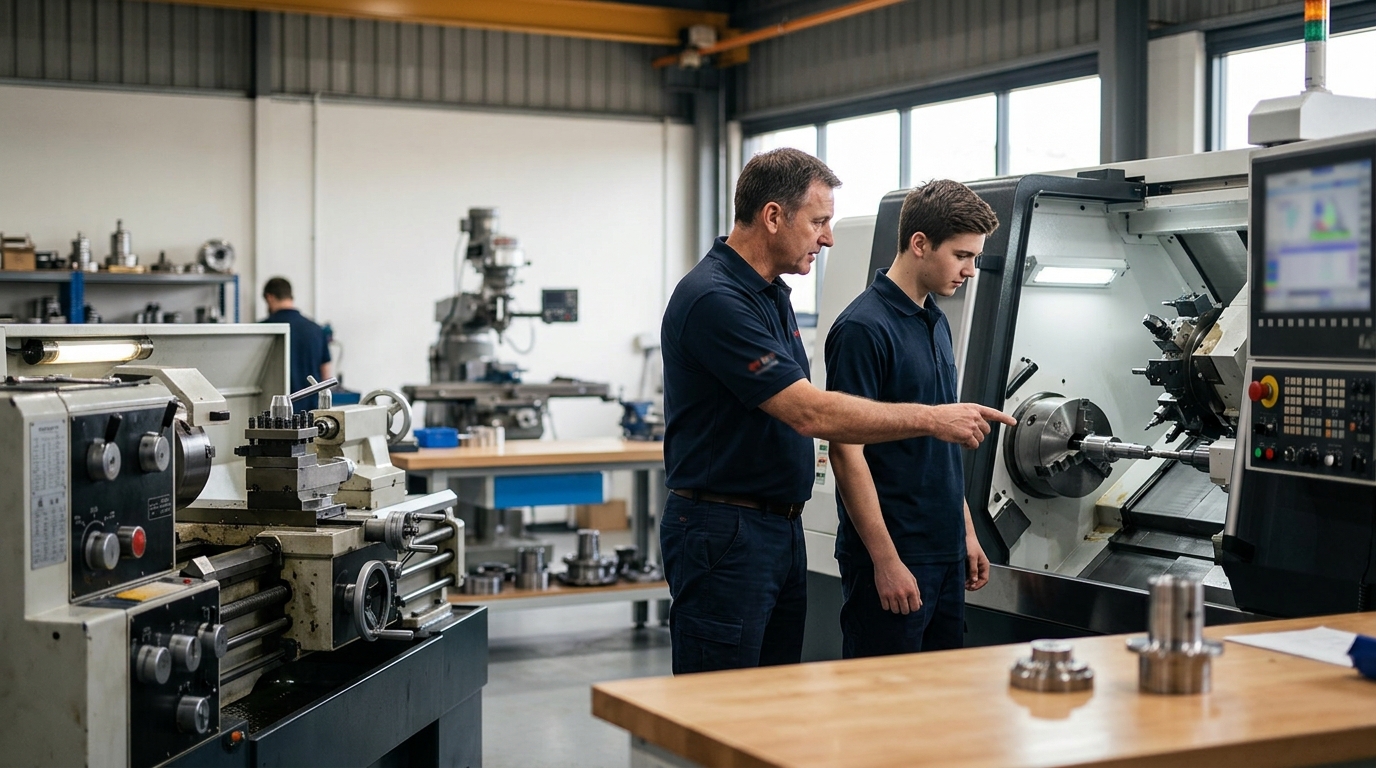
Choosing the right metalworking equipment is a critical financial decision that impacts your shop floor efficiency for years. Industry reports indicate that modern manufacturing facilities are increasingly adopting multi-axis turning technologies to reduce cycle times. This shift forces workshop managers to decide between traditional CNC lathes and advanced turning centres. The choice depends entirely on your part complexity and production volume.
Core Differences Between CNC Lathes and Turning Centres
Understanding the fundamental architecture of these machines is the first step in making a smart investment. A CNC lathe is a computer-controlled machine tool that rotates the workpiece about an axis to perform operations such as cutting, sanding, knurling, and drilling. These machines are designed primarily for rotational symmetry.
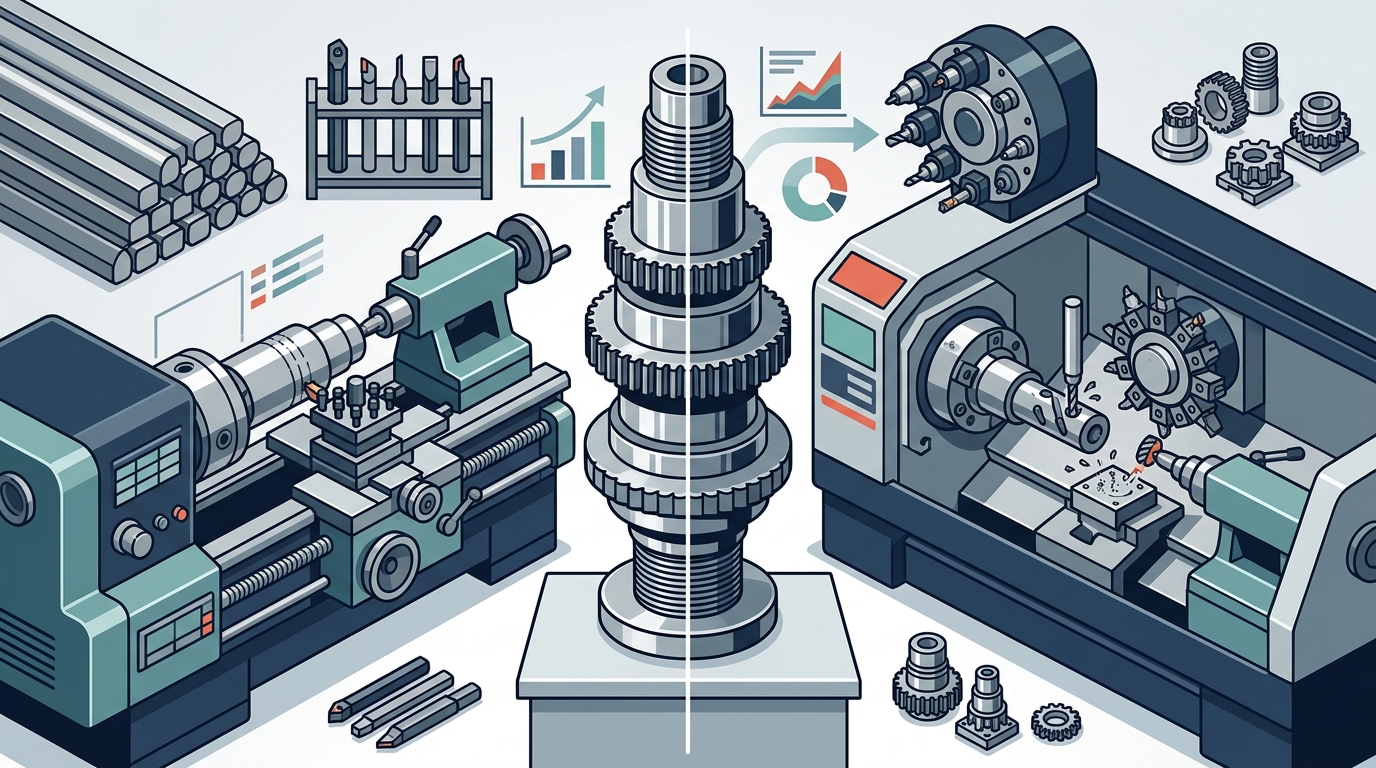
In contrast, a turning centre is a more complex evolution of the lathe. It integrates milling capabilities directly into the turning process. This allows the machine to perform non-rotational operations without requiring the operator to move the part to a separate milling machine. The turning centre effectively combines the functions of a lathe and a milling machine into a single unit.
The primary distinction lies in the tooling turret and the drive system. A standard CNC lathe typically features a simpler turret with fewer tool stations. A turning centre utilizes a live tooling turret with a driven spindle. This driven spindle allows the tools to rotate independently of the main chuck, enabling milling and drilling operations on the workpiece while it is held in the lathe.
Capability Analysis: Milling, Drilling, and Tapping
The ability to perform secondary operations on the same setup is the most significant advantage of a turning centre. In a traditional workflow, a part might be turned on a lathe, then moved to a milling machine for drilling cross-holes. This transfer introduces setup errors and increases cycle time.
With a turning centre, you can mill flats, drill holes, and tap threads in a single clamping. This complete machining approach reduces handling time and improves positional accuracy. For complex parts, this consolidation is not just a convenience; it is a necessity for maintaining tight tolerances.
However, a CNC lathe remains superior for high-volume production of simple rotational parts. The simplicity of the machine allows for faster cycle times on basic geometries. If your workshop primarily produces shafts, bushings, or simple pins, a CNC lathe offers the most efficient path to production.
Brand Comparison: King Rich and Vision Wide
QMT Machinery partners with global brands that meet stringent qualification processes. When comparing machine tools, the brand ecosystem plays a vital role in long-term support and reliability. Our brand portfolio includes industry leaders like King Rich and Vision Wide.
| Feature | King Rich CNC Lathes | Vision Wide Turning Centres |
|---|---|---|
| Primary Focus | High-speed turning and general engineering | Complex multi-axis machining and mould making |
| Tool Turret | Standard hydraulic turret | Live tooling with driven spindles |
| Best For | Volume production of rotational parts | Prototyping and complex component manufacturing |
| Support | Local Aussie hands and service | Local Aussie hands and service |
King Rich machines are renowned for their robustness and reliability in general engineering workshops. They provide a cost-effective entry point into CNC machining. Vision Wide, on the other hand, is often associated with higher precision and complex capabilities. This makes it an ideal choice for workshops dealing with automotive moulds or aerospace components.
Cost-Benefit Analysis for Australian Workshops
Investing in machine tools requires a clear understanding of the total cost of ownership. A CNC lathe typically has a lower initial purchase price than a turning centre. This makes it an attractive option for small workshops or educational institutions with limited capital. However, the lower upfront cost must be weighed against potential production limitations.
Turning centres command a higher price due to their advanced technology and multi-functionality. The return on investment comes from reduced labour costs and increased throughput. By eliminating the need for secondary operations, you reduce the number of operators required and minimize the risk of part damage during handling.
QMT Machinery bridges the gap between low-cost imports and high-end OEMs. We offer reliable, high-performance equipment that delivers real value. Whether you are outfitting a new workshop or upgrading existing equipment, our team can help you tailor a solution that works for your budget and your goals. Our 2025 buying guide provides further insights into making these financial decisions.
Key Takeaways
- Machine Definition: A CNC lathe is a computer-controlled machine tool that rotates the workpiece about an axis to perform operations such as cutting, sanding, knurling, and drilling.
- Turning Centre Definition: A turning centre is a multi-functional machine that integrates milling capabilities into the turning process, allowing for non-rotational operations without part transfer.
- Brand Heritage: QMT Machinery has served the Australian market since 1967, providing decades of experience and trust to thousands of operators.
- King Rich Strength: King Rich machines are trusted by Australian workshops for their durability and suitability for general engineering tasks.
- Vision Wide Capability: Vision Wide turning centres are ideal for complex applications, including automotive mould making and precision engineering.
- Support Network: QMT provides market-leading service with expert technicians and a commitment to long-term performance.
- Remote Diagnostics: QMT offers internet-based machine tool service for real-time insights and efficiency.
Frequently Asked Questions
What is the main difference between a CNC lathe and a turning centre?
A CNC lathe is designed primarily for rotational operations, while a turning centre includes live tooling that allows for milling and drilling on the workpiece without removing it from the chuck.
Is a turning centre worth the extra cost?
For workshops producing complex parts, a turning centre is often worth the investment due to reduced setup times and improved accuracy. For simple rotational parts, a CNC lathe may be more cost-effective.
Which brand is better for general engineering: King Rich or Vision Wide?
King Rich is highly regarded for general engineering and robust performance. Vision Wide is often preferred for complex, high-precision applications like mould making.
Does QMT Machinery provide after-sales support?
Yes, QMT stands behind every machine with relentless support, expert technicians, and a commitment to long-term performance. We provide real people, real parts, and real care.
Can I get remote diagnostics for my machine tools?
Yes, QMT offers remote diagnostics via internet-based machine tool service to unlock unprecedented efficiency and real-time insights for your workshop.
What types of machines does QMT Machinery supply?
QMT supplies a wide range of machines including manual milling machines, machining centres, large machining centres, manual lathes, CNC lathes, turning centres, surface grinders, cylindrical grinders, and EDM machines.
How long has QMT Machinery been in business?
QMT Machinery was founded in 1967 and has over four decades of continuous service in Australia’s manufacturing and engineering sectors.
Contact QMT Machinery
Ready to upgrade your workshop? Contact our experienced team today to discuss your specific needs. We are here to help you succeed with world-class equipment and decades of experience. Visit our contact page to get started.