
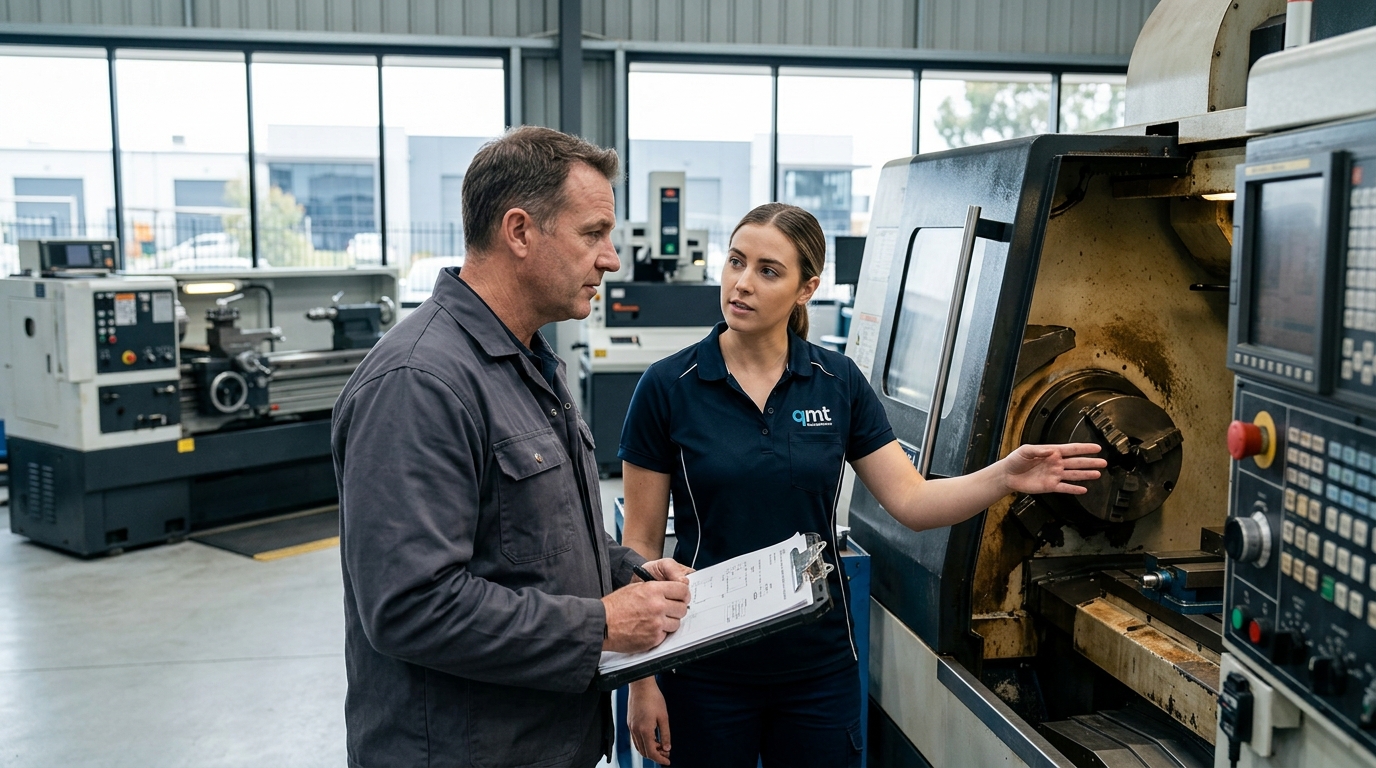
Investing in industrial machinery is one of the most significant capital decisions a workshop owner can make. The cost of ownership extends far beyond the initial purchase price, encompassing maintenance, downtime, and operational efficiency. According to industry analysis, manufacturing businesses that prioritize rigorous equipment evaluation see a 20% reduction in operational costs within the first two years of implementation. This guide provides a structured framework for evaluating machine tools, leveraging decades of Australian manufacturing expertise to help you make informed decisions. (QMT Machinery Quality Machine)
Understanding Core Evaluation Criteria
When evaluating machine tools, precision and reliability are non-negotiable. A milling machine must maintain tight tolerances under heavy loads, while a lathe must ensure consistent surface finishes over thousands of cycles. The definition of a Machining Centre is a computer-controlled machine tool that automates the process of cutting, drilling, and milling various materials with high precision.
Evaluating the structural integrity of a machine involves looking at its cast iron composition, spindle speed consistency, and axis rigidity. Machines built with high-grade materials resist vibration better, which directly translates to longer tool life and superior part quality. For Australian workshops, where energy costs and operational efficiency are critical, selecting machines that balance power with energy consumption is vital.
Furthermore, the evaluation process must consider the machine's adaptability. Modern manufacturing requires flexibility. Can the machine handle complex geometries? Is it compatible with your existing CAD/CAM workflows? These questions determine whether a machine is a short-term solution or a long-term asset.
Brand Partnerships and Reliability
The reputation of a machine tool manufacturer is a strong indicator of its long-term viability. QMT Machinery has spent over four decades building relationships with global brands that meet stringent qualification processes. These brands are proven through decades of industry experience and supported by service teams you can actually speak with.
Partnering with established manufacturers ensures that you are not just buying hardware, but accessing a global network of innovation and support. Brands like King Rich have become trusted names in Australian workshops because they deliver machines that hold up under daily use. Their commitment to manufacturing excellence aligns with the rigorous demands of the Australian market.
When evaluating brands, look for those that offer a balance of global innovation and local support. A brand that is well-supported locally will have faster access to spare parts and technical expertise. This reduces downtime significantly, which is crucial for maintaining production schedules. For more insights on trusted brands, visit our Brands page.
Service and Support Infrastructure
After-sales service is the backbone of trust in the machine tool industry. Anyone can sell machines, but few have the passion to keep them running like QMT has since 1967. Evaluating the support infrastructure available to you is as important as evaluating the machine itself.
Remote diagnostics have revolutionized machine tool service. By embracing internet-based machine tool remote diagnostics, workshops can unlock unprecedented efficiency and real-time insights. This technology allows technicians to diagnose issues before they cause significant downtime, ensuring that your operations continue smoothly. Learn more about our Remote Diagnostics services.
Additionally, the availability of expert technicians and genuine spare parts is critical. A robust support network ensures that your machines remain operational for years to come. QMT’s commitment to market-leading service means that you are backed by real people, real parts, and real care. This level of support is essential for maintaining the longevity of your investment.
Comparing Machine Types for Your Needs
Different manufacturing processes require different types of machine tools. Understanding the distinctions between them is crucial for making the right choice. The definition of a CNC Lathe is a computer-controlled lathe that automates the turning process to produce precise cylindrical parts with high repeatability.
For example, Wire EDMs and Sinker EDMs serve different purposes. Wire EDMs are ideal for cutting intricate shapes through conductive materials, while Sinker EDMs are used for creating complex cavities and molds. Choosing the right type depends on your specific application requirements. Explore our EDM Explained guide for detailed comparisons.
| Machine Type | Primary Application | Key Evaluation Factor | QMT Recommendation |
|---|---|---|---|
| Manual Milling Machine | General engineering, prototyping | Operator skill dependency | View Manual Milling Options |
| CNC Machining Centre | High-volume, complex parts | Automation and precision | View CNC Centres |
| CNC Lathe | Cylindrical parts, turning | Spindle speed and rigidity | View CNC Lathes |
| Wire EDM | Intricate cuts, hard materials | Wire tension and control | View Wire Cutters |
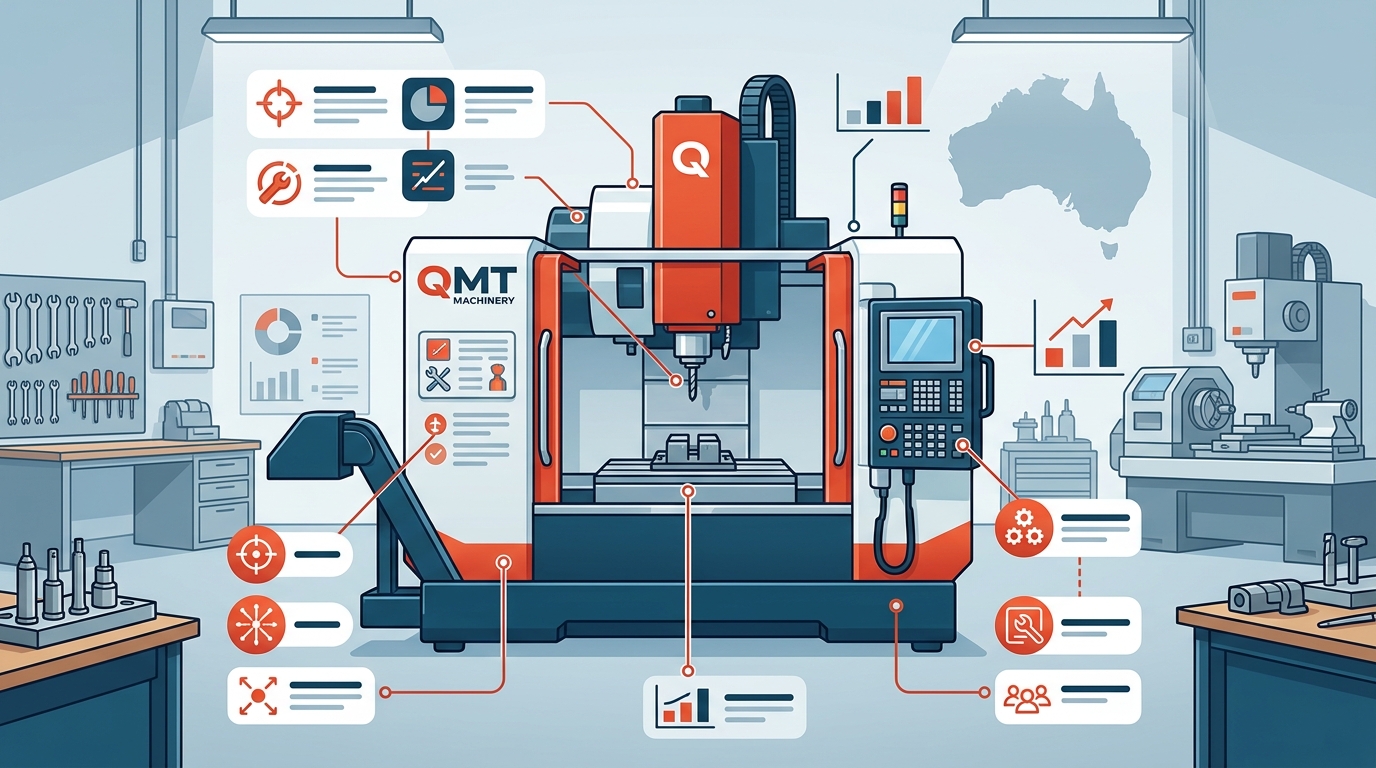
Financial Considerations and ROI
Evaluating the financial aspect of machine tool acquisition involves looking at the total cost of ownership. This includes the initial purchase price, installation costs, maintenance, energy consumption, and potential resale value. QMT bridges the gap between low-cost imports and high-end OEMs, offering reliable, high-performance equipment that delivers real value.
Consider the impact of downtime on your bottom line. A machine that requires frequent repairs or has long lead times for spare parts can cost more in the long run than a higher-quality alternative. Investing in machines with strong local support can mitigate these risks. For a detailed breakdown of costs, check out our article on workshop efficiency.
Additionally, consider the potential for increased productivity. Modern machines with advanced features can reduce cycle times and improve part quality, leading to higher revenue. The return on investment (ROI) is not just about saving money but also about generating more value through enhanced capabilities.
Key Takeaways
- Longevity: QMT Machinery has served the Australian market since 1967, providing over four decades of continuous service.
- Brand Quality: We partner only with brands that meet stringent qualification processes, ensuring global quality with local support.
- Service Excellence: Our market-leading service includes remote diagnostics and expert technician support to minimize downtime.
- Value Proposition: QMT offers unmatched value by bridging the gap between low-cost imports and high-end OEMs.
- Comprehensive Range: From manual lathes to large machining centres, we provide a full spectrum of machine tools.
- Local Expertise: Based in Victoria, we offer tailored solutions for Australian workshops and educational institutions.
- Customer Focus: Our commitment is to help Australian businesses succeed through world-class equipment and support.
Frequently Asked Questions
What is the definition of a Turning Centre?
A Turning Centre is a type of CNC machine that combines turning and milling capabilities to perform multiple operations in a single setup, increasing efficiency and precision.
How does QMT ensure the quality of its brands?
QMT uses a stringent qualification process that includes testing for manufacturing excellence, service support availability, and long-term reliability before adding any brand to its catalogue.
What are the benefits of remote diagnostics?
Remote diagnostics allow for real-time monitoring and troubleshooting of machine tools, reducing downtime and enabling proactive maintenance to prevent costly failures.
Does QMT offer support for educational institutions?
Yes, QMT tailors solutions for educational institutions, providing training and equipment that meet the needs of tomorrow’s metalworkers, such as those at Chisholm Institute.
How can I evaluate if a machine is right for my workshop?
Consider your specific application requirements, budget, and the level of support available. Consulting with QMT’s experienced team can help you make an informed decision.
What types of machines does QMT specialize in?
QMT specializes in milling machines, turning machines, grinding machines, EDM machines, and metrology equipment, catering to a wide range of manufacturing needs.
Why is after-sales service important when buying machine tools?
After-sales service ensures that your machines remain operational and efficient over time, reducing downtime and extending the lifespan of your investment.
Can I get a brochure of QMT’s products?
Yes, you can enter your email on our website to receive a comprehensive brochure directly to your inbox, detailing our full range of products and services.
Contact Us
Evaluating machine tools is a critical step in ensuring the success of your manufacturing operations. By focusing on quality, support, and value, you can make a decision that benefits your business for years to come. QMT Machinery is here to help you navigate this process with expertise and integrity.
For more information about our products and services, please contact us or visit our About Us page to learn more about our history and commitment to excellence. We look forward to partnering with you to achieve your manufacturing goals.